Our trip to Portugal began with a free show. Somewhere over (probably) Greenland, on the overnight flight from San Francisco to Amsterdam, the sky outside the window turned green and started to ripple. The aurora borealis is on a lot of bucket lists. We crossed it off without leaving our seats, which sets a very high bar for the rest of a vacation.

Portugal cleared it anyway.
There were six of us, a family affair, and we picked the destination the honest way: we laid everyone’s calendars side by side and looked for the place that fit the gap. None of us had ever been to Portugal. One of us had never been to Europe at all. It turned out that we had brought a surprising amount of expertise along. Our son is a sommelier and the beverage manager at a Michelin-starred restaurant. Our daughter is an interior designer who cannot walk past a sconce without forming an opinion. Another of us designs and builds custom furniture, and another has a career in sports medicine. Most of us consider ourselves foodies. (Our daughter and the furniture-maker could only stay a week, since he had a business to get back to, so they flew home on our second morning in Porto. The rest of us carried on eating in their honor.) So we saw the same country through six different sets of professional eyes. Mostly those eyes were looking at dinner.
Two story arcs emerged. The first is linguistic: I speak Spanish reasonably well, and I assumed that would carry me through Portuguese. It did not. Portuguese takes Spanish, runs it through Lewis Carroll’s vorpal blade (snicker-snack!), and hands back something that looks familiar and sounds like a Spaniard talking through a mouthful of pastry. The second arc is culinary, and it ends with me, a man who never had much use for port, developing a sincere and somewhat expensive appreciation for 20-year-old Tawny.
The verdict up front: to a person, the Portuguese were friendly, warm, and accommodating, and the food was extraordinary. We would go back tomorrow.
About the images: I reserve all rights to use of these images for any commercial purpose. You may use them as backgrounds or wallpaper for your personal use, but any other use requires a license. Unattributed Images were taken by Steven Christenson with a Samsung S24 Ultra phone unless otherwise noted. Most other images were taken on iPhones.
The Itinerary: Two Weeks, South to North
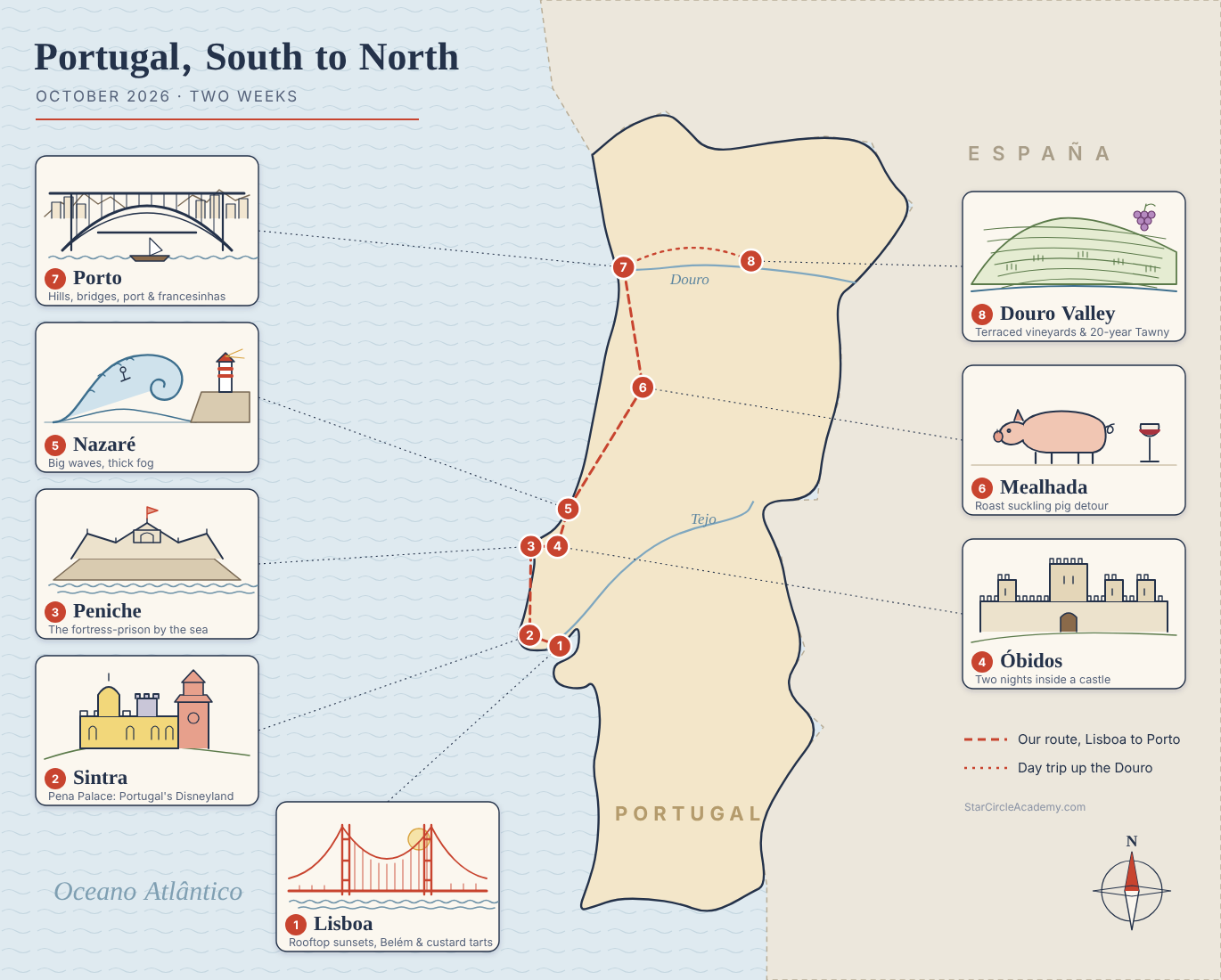
Our travel agent, Betty Hazle of Los Gatos Travel, put the itinerary together with help from Titanium Tours in Portugal. We flew into Lisboa and worked our way north to Porto, with the Douro Valley as a detour inland:
- Lisboa, staying at the Hotel do Chiado
- Sintra day trip: Pena Palace, the Moorish Castle, and the wild Atlantic coast
- Peniche (en route north): a fortress with a dark history
- Óbidos, sleeping inside the castle at the Pousada do Castelo
- Nazaré (en route): big-wave capital of the world
- Mealhada (en route): lunch in a town that runs on roast suckling pig
- Porto, staying at Wine & Books, with a day in the Douro Valley
A word on names. The Portuguese call their capital Lisboa, which English speakers have flattened into “Lisbon.” I prefer the native name, so it’s Lisboa from here on. You’ve been warned.
Lisboa: Landing in the Middle of Town
The approach into Lisboa is unnerving. The airport sits inside the city, so the final descent goes over rooftops, apartment balconies, and laundry lines, close enough that you start to wonder whether the runway is a boulevard. It is not. But it’s a near thing.
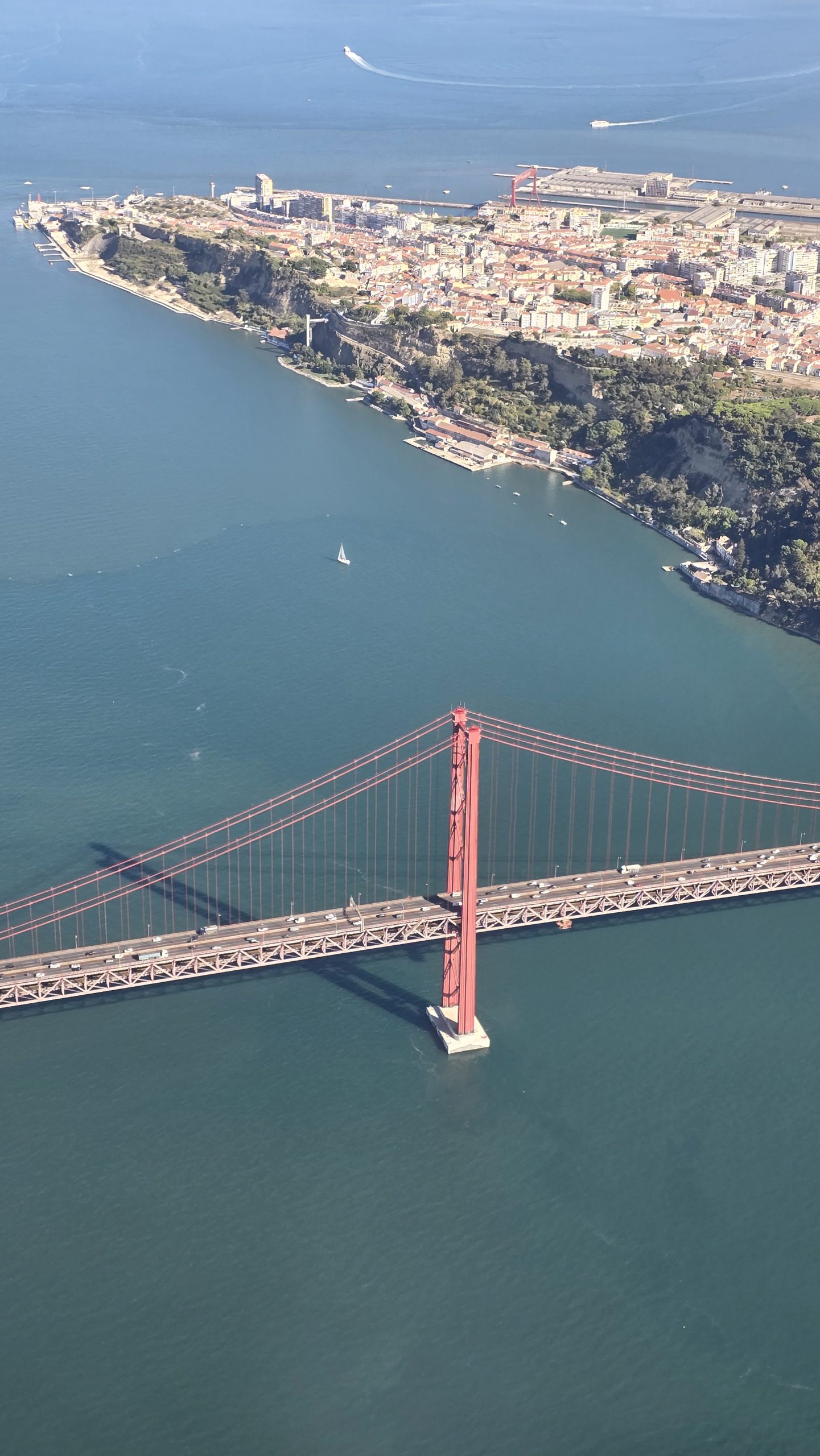
Before landing we got a gift of a view: the 25 de Abril Bridge stretching across the Tagus. Anyone from the San Francisco Bay Area does a double take. It’s painted the same International Orange as the Golden Gate, and it was built by the same company that built the San Francisco–Oakland Bay Bridge, which it closely resembles. It’s also much younger than either: it opened in 1966 as the “Salazar Bridge,” named for the dictator, and was renamed after the 1974 Carnation Revolution that ended his regime. The bridge got a train deck in 1999. The Golden Gate is still waiting. It looks like a San Francisco bridge that moved to Europes because it more or less is.
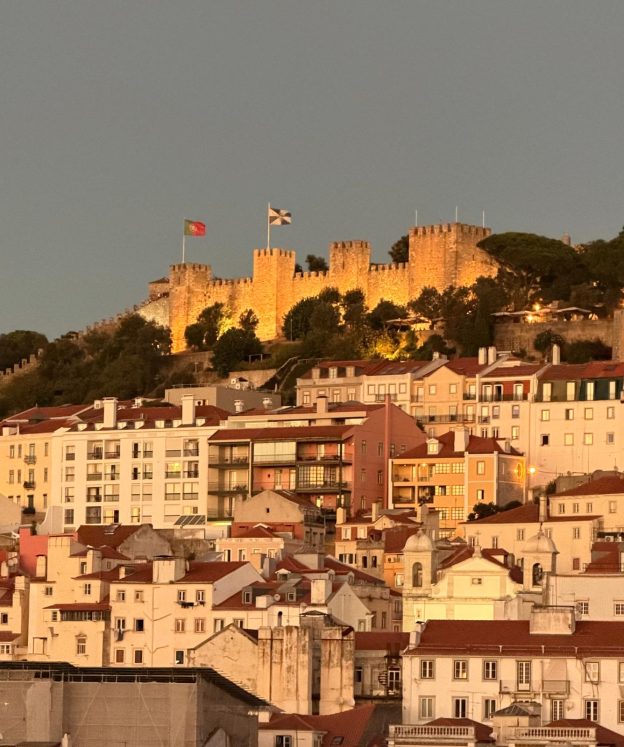
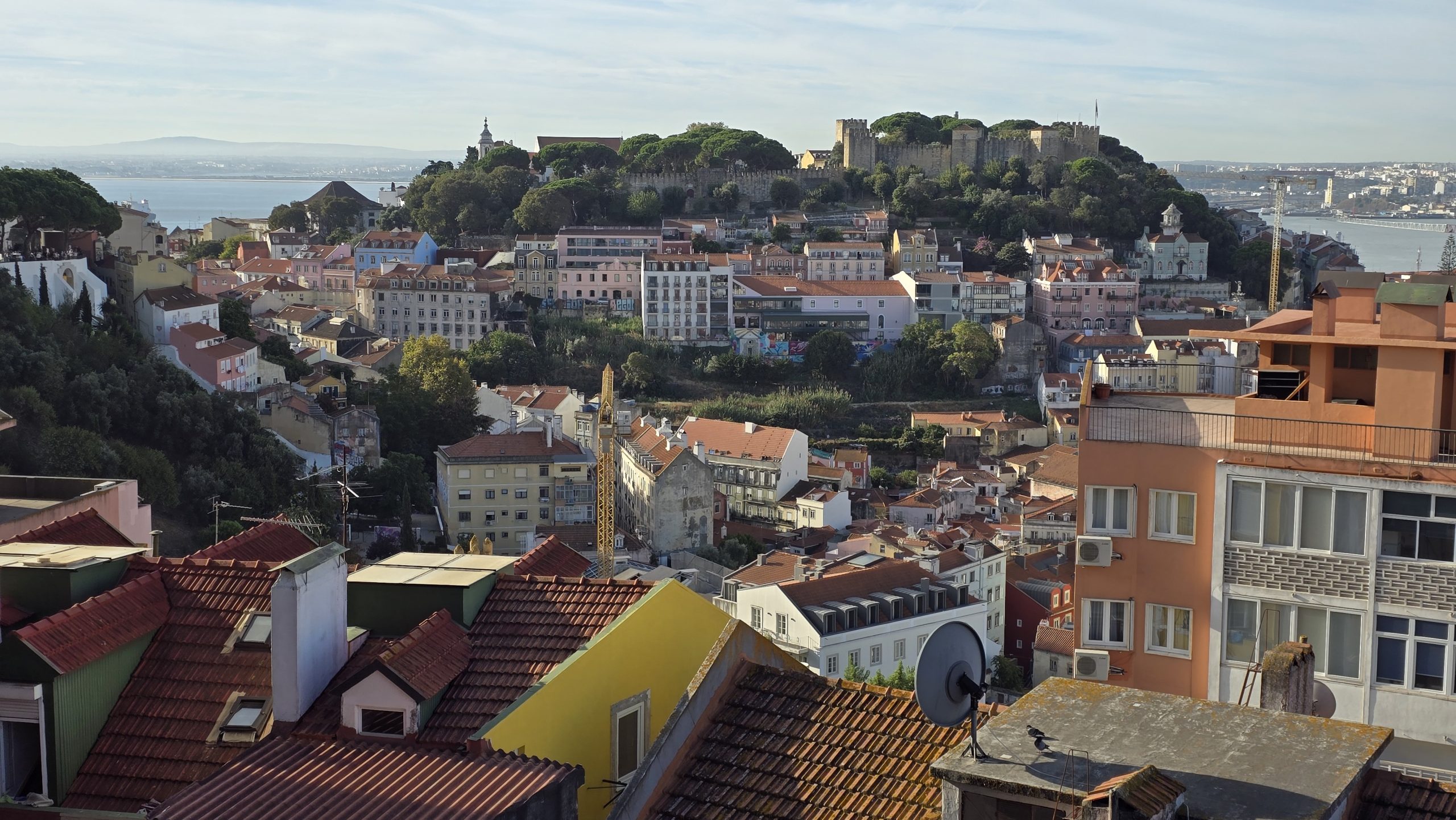
The San Francisco comparisons don’t stop at the bridge. Lisboa is called the “City of Seven Hills” (San Francisco makes the same claim), and the hills come with stairs. Lots of stairs. The view from the Miradouro da Senhora do Monte, looking across terracotta roofs to the Castelo de São Jorge, is worth every one of them.
Belém: Monks, Monuments, and the Original Custard Tart
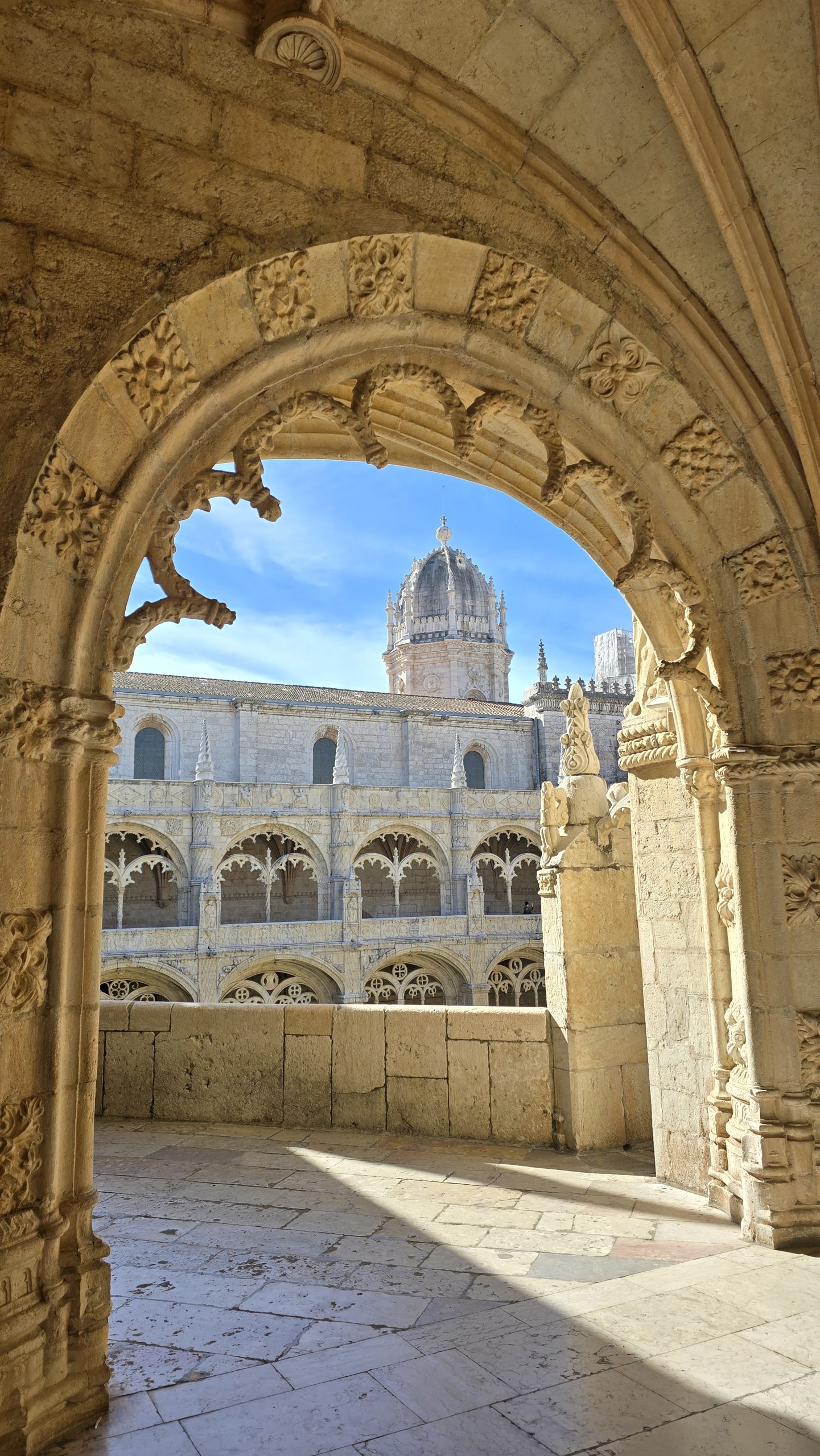
Belém, at the western edge of the city along the river, is where Portugal keeps its Age of Discovery greatest hits. The Jerónimos Monastery is a riot of carved limestone in the Manueline style: ropes, sea creatures, armillary spheres, and arches carved so finely they look like lace. It’s the kind of handwork that makes a modern craftsman, like the furniture-maker in our group, wince at the thought of quoting the job.
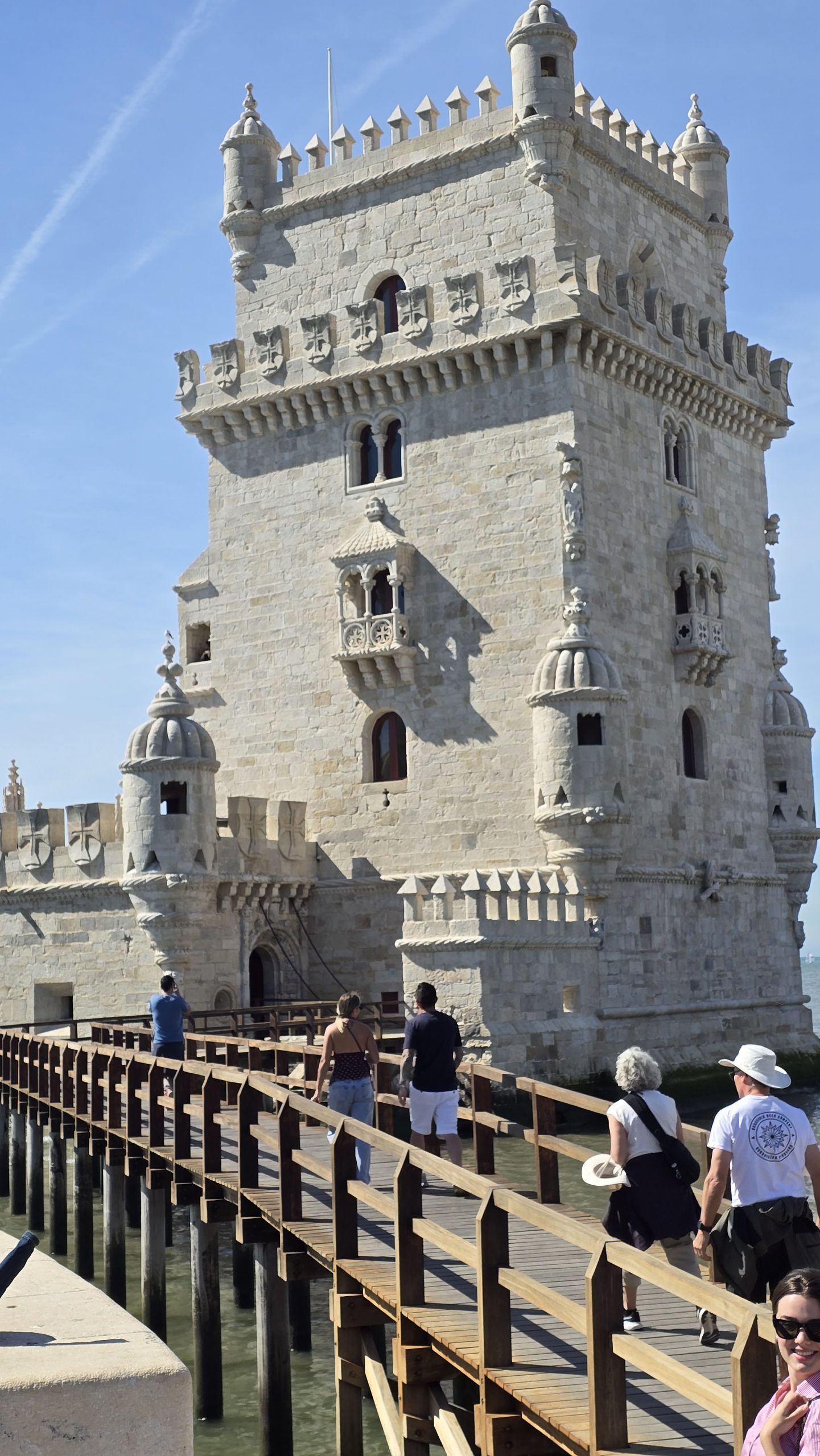
A short walk away is the Belém Tower, a 16th-century fortress that guarded the mouth of the Tagus and now guards a long line of tourists waiting to climb it.
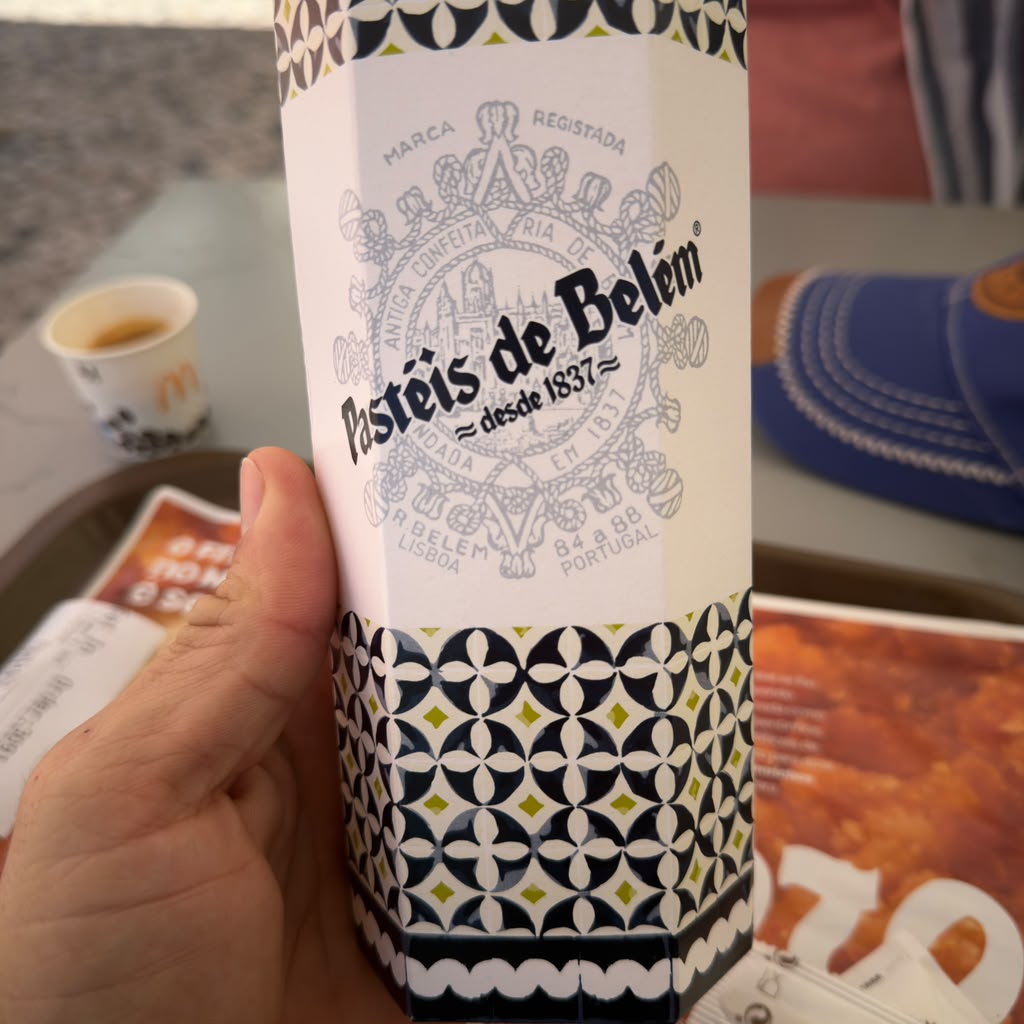
And then there are the pastries. Pastéis de Belém has been baking pastéis de nata, the famous Portuguese custard tarts, since 1837, from a recipe said to come from the monks of Jerónimos next door. The recipe is still a closely guarded secret. The tarts are flaky, blistered on top, faintly lemony, and dangerous in groups of six. They usually come with a shaker of cinnamon to dust on top, and, boy, is that the way to eat them. Powdered sugar is the alternative, and purists go bare. Every bakery in Portugal sells pastéis de nata; only this one is allowed to call them pastéis de Belém.
We tried them at various shops (after copious research and a free and fair election, we awarded second place to Manteigaria). They appeared in our hotel room. They appeared at every breakfast buffet, everywhere. We ate them all, strictly for comparison purposes. That’s called research.
Entretanto: Meanwhile, on the Roof
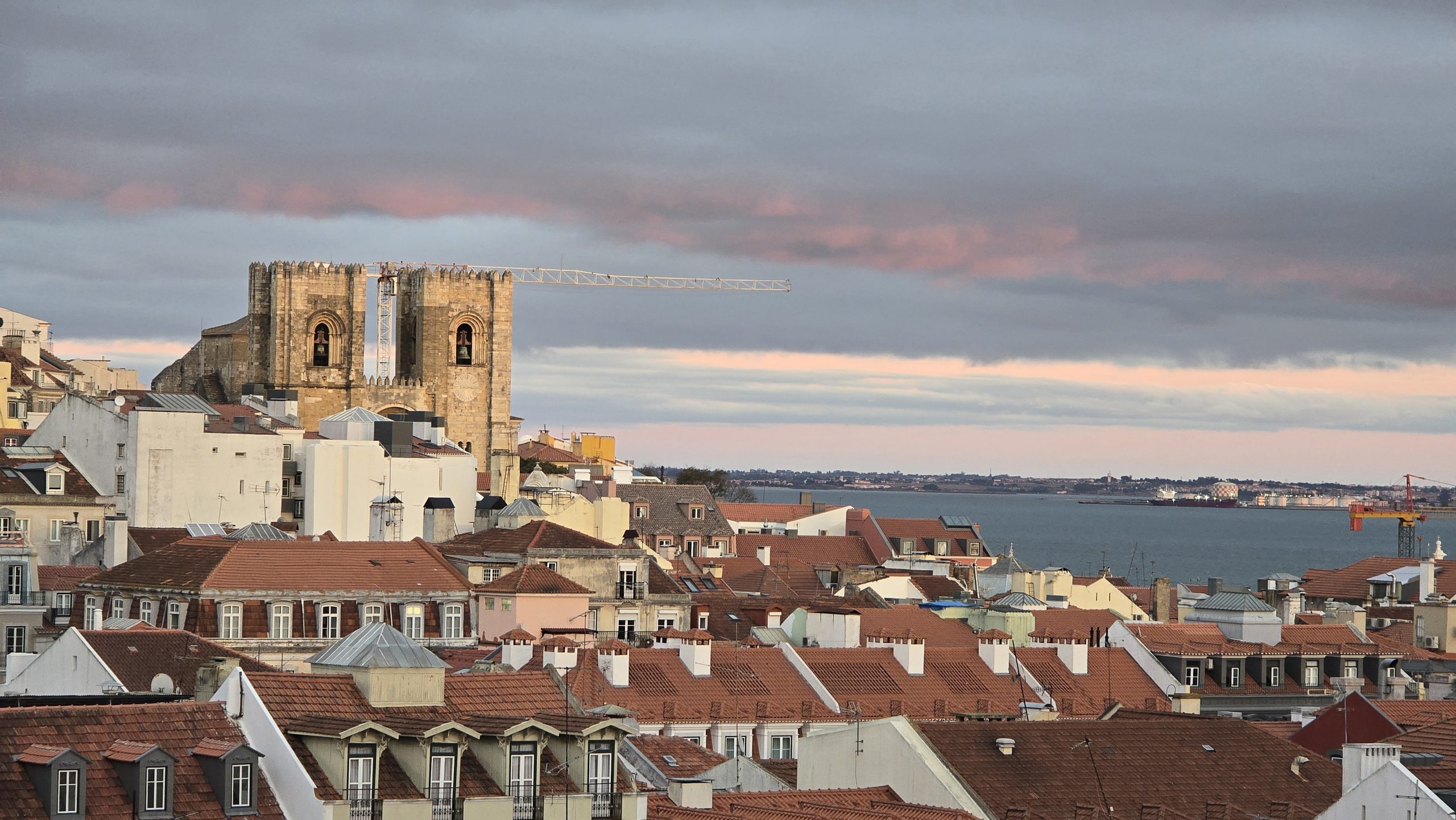
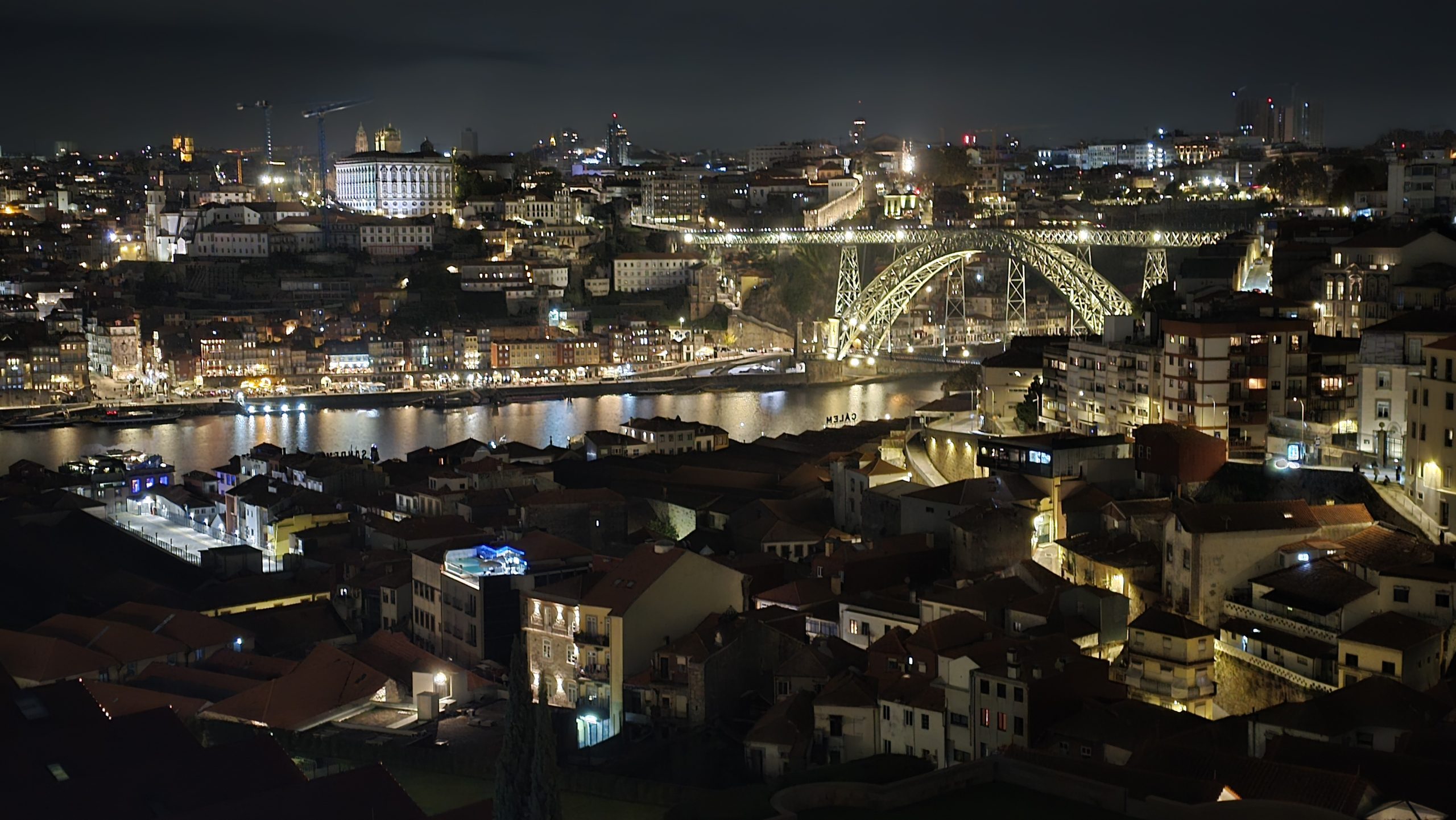
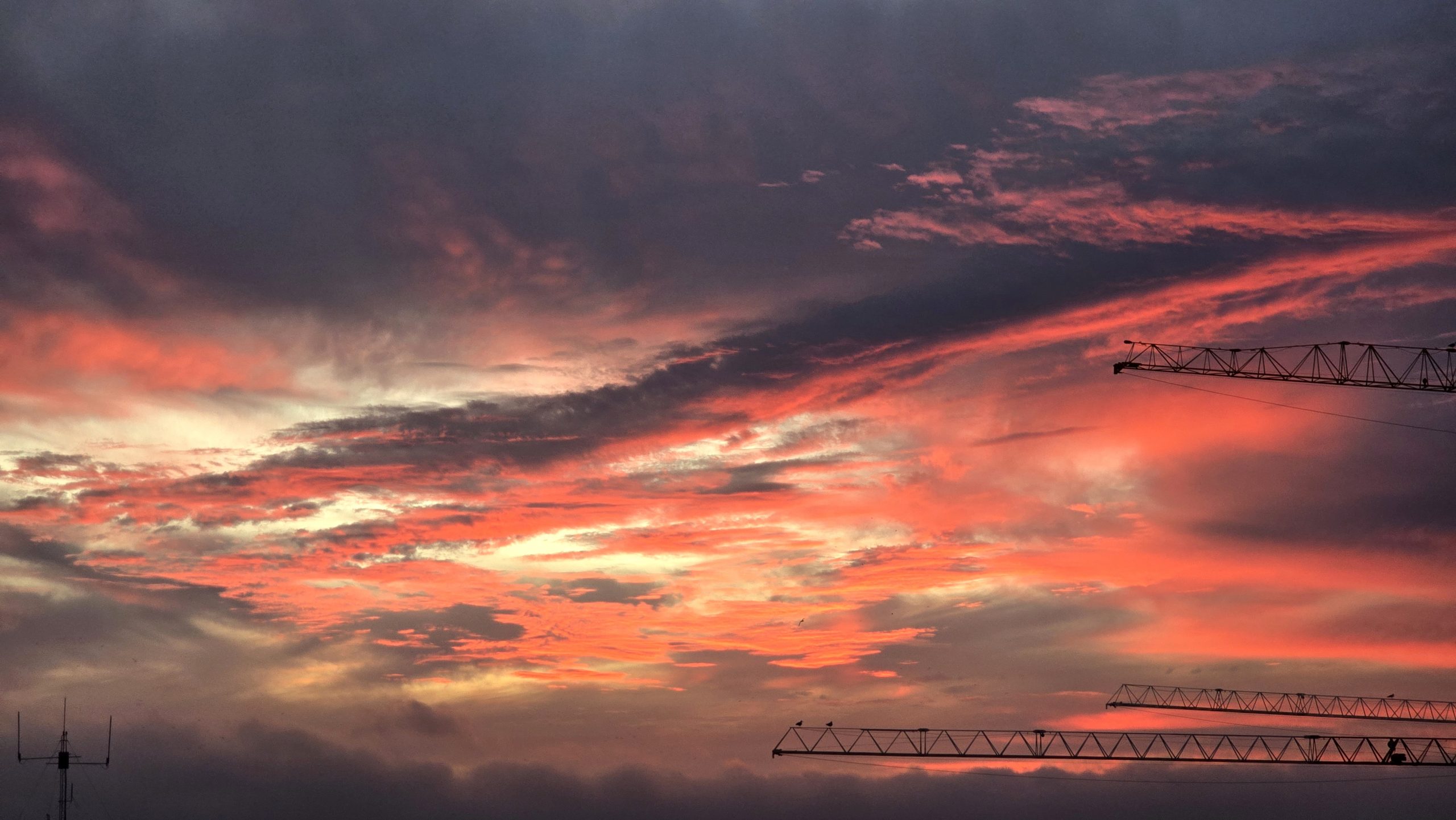
Our hotel, the Hotel do Chiado, has a rooftop bar called Entretanto, which means “meanwhile” or “in the meantime.” It’s the perfect name for a place where you wait for the sun to go down, and we did a lot of waiting there. The view takes in the Lisboa Cathedral, the red rooftops of the Baixa, and the river beyond, and the sunsets were consistently beautiful.
The charcuterie at Entretanto was excellent, but the surprise of the trip was a plate of tempura-fried green beans. They’re called peixinhos da horta, “little fish from the garden,” because the battered beans look like small fried fish. Portuguese Jesuits are credited with bringing this batter-frying technique to Japan in the 1500s, where it eventually became tempura. So we were eating tempura’s great-grandparent, on a roof, in the city where it was born. It was fantastic.
A City That Speaks Up
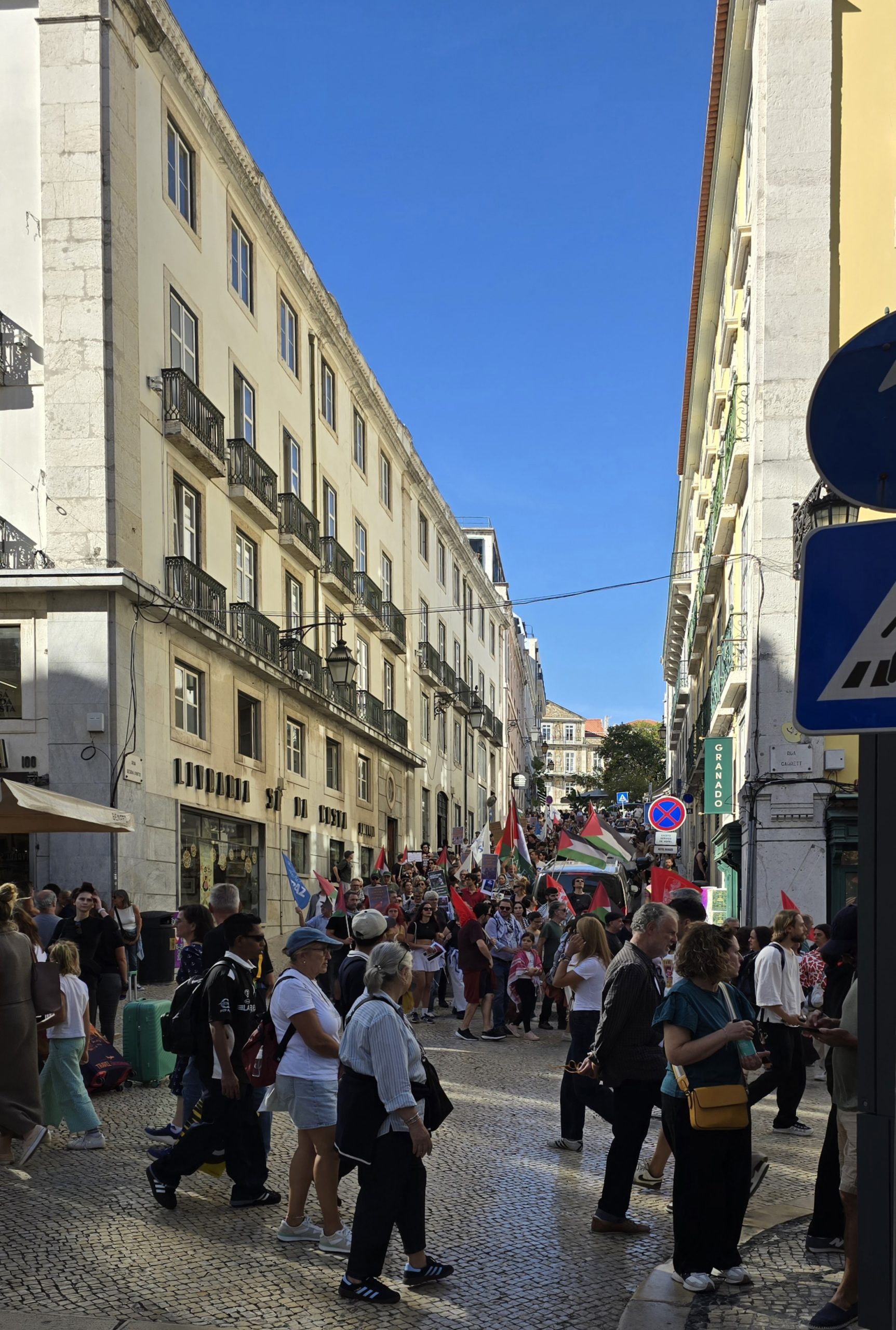
We saw three protests while we were in Portugal. Lisboa had a housing protest and a march for Palestine that stretched for many, many blocks. All three were peaceful while we were there. After we left, that changed (more on that in the Porto section). Portugal’s housing squeeze is real (rents and home prices have far outpaced local wages, and short-term rentals and foreign buyers get much of the blame), and the people affected are not being quiet about it.
Sintra: The Disneyland of Portugal
Pena Palace sits on a peak above Sintra, and it looks like a castle designed by a committee of children with unlimited paint. It’s yellow, red, and gray; it has Moorish arches, Gothic turrets, Manueline windows, and domes. King Ferdinand II built it in the mid-1800s as a Romantic fantasy, and it succeeds magnificently.
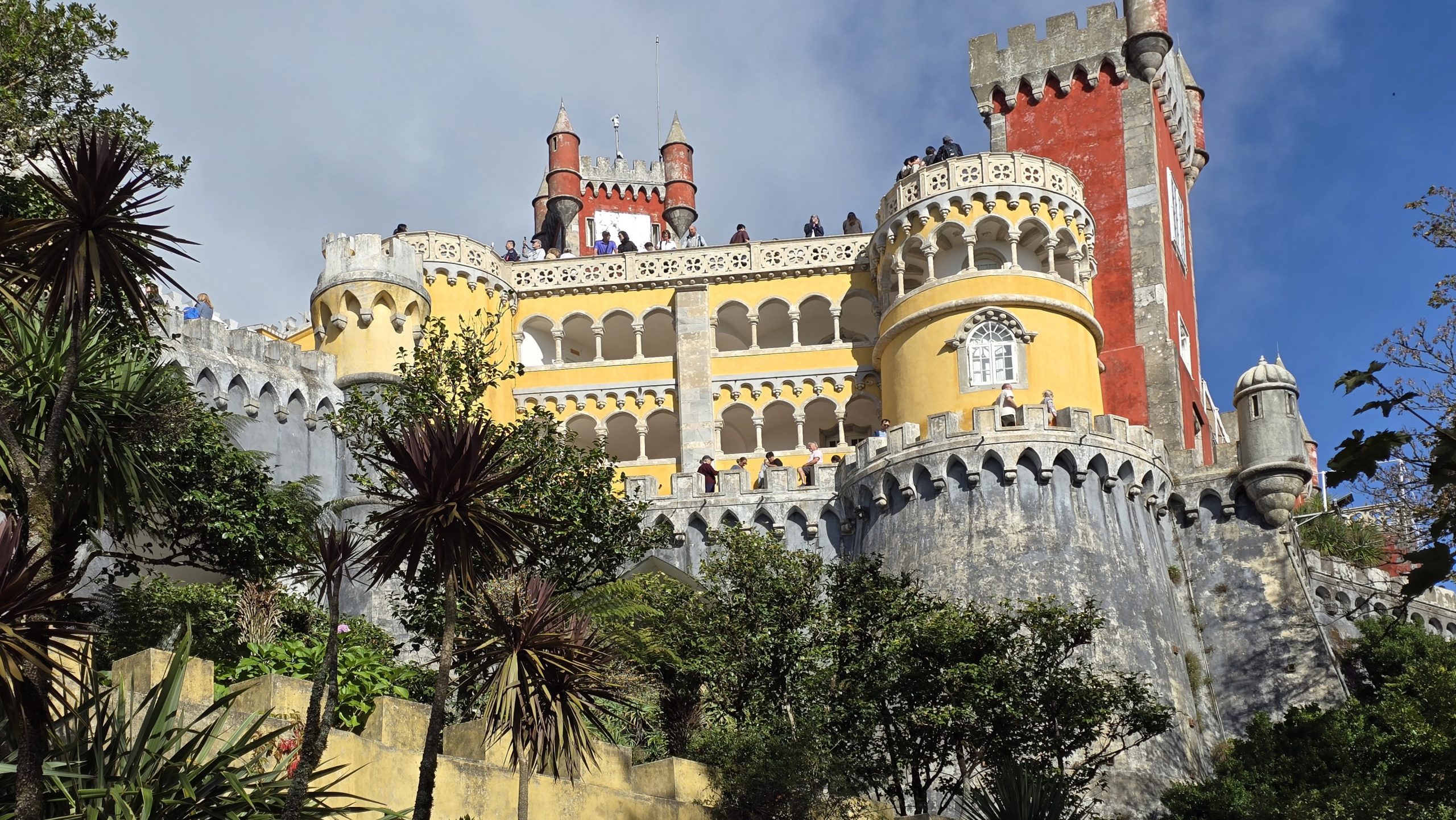
It is also the Disneyland of Portugal, complete with Disneyland lines and Disneyland crowds. As we shuffled along with several thousand of our closest friends, we were offered this comfort: “This is not the worst it gets.”
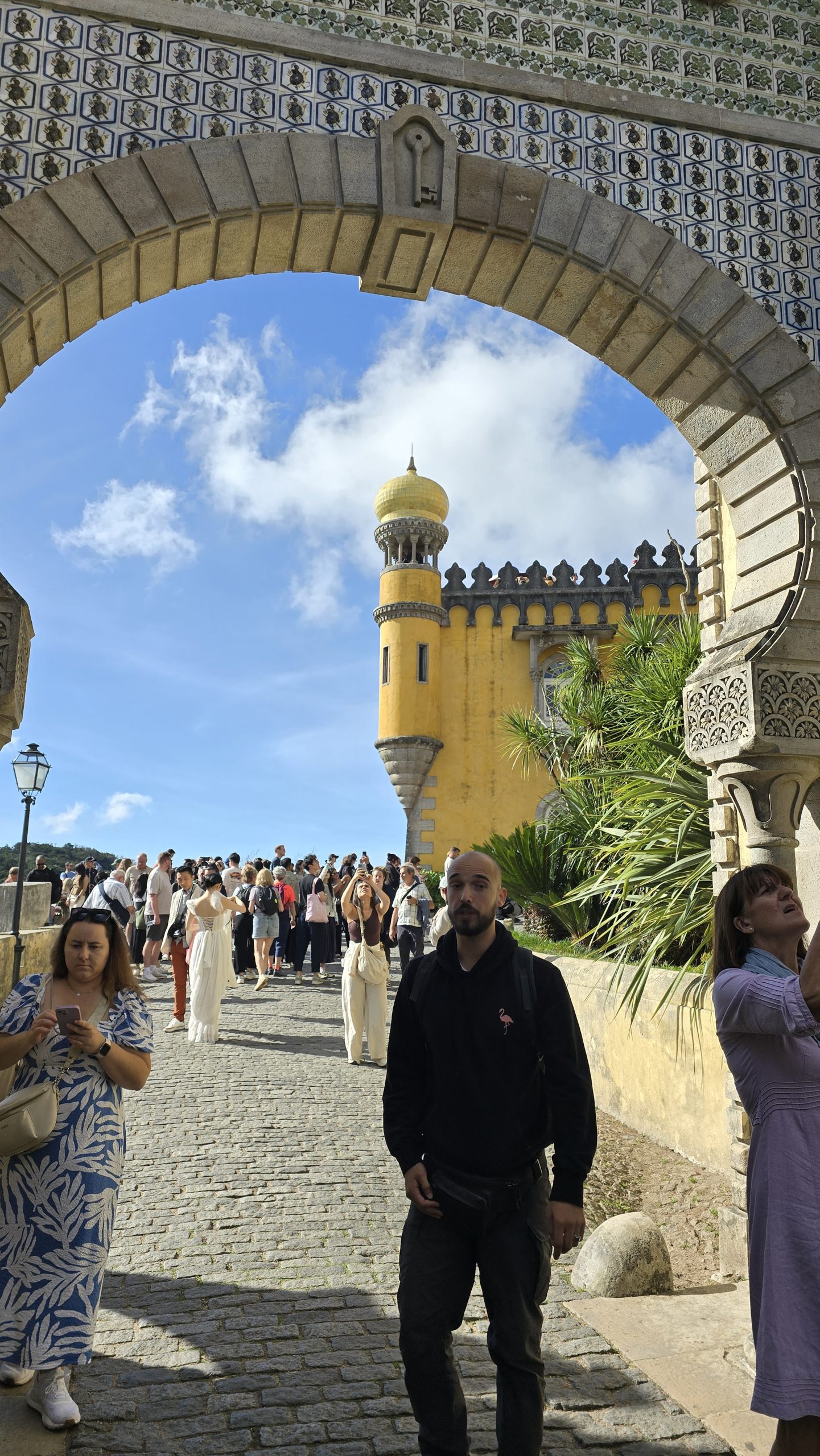
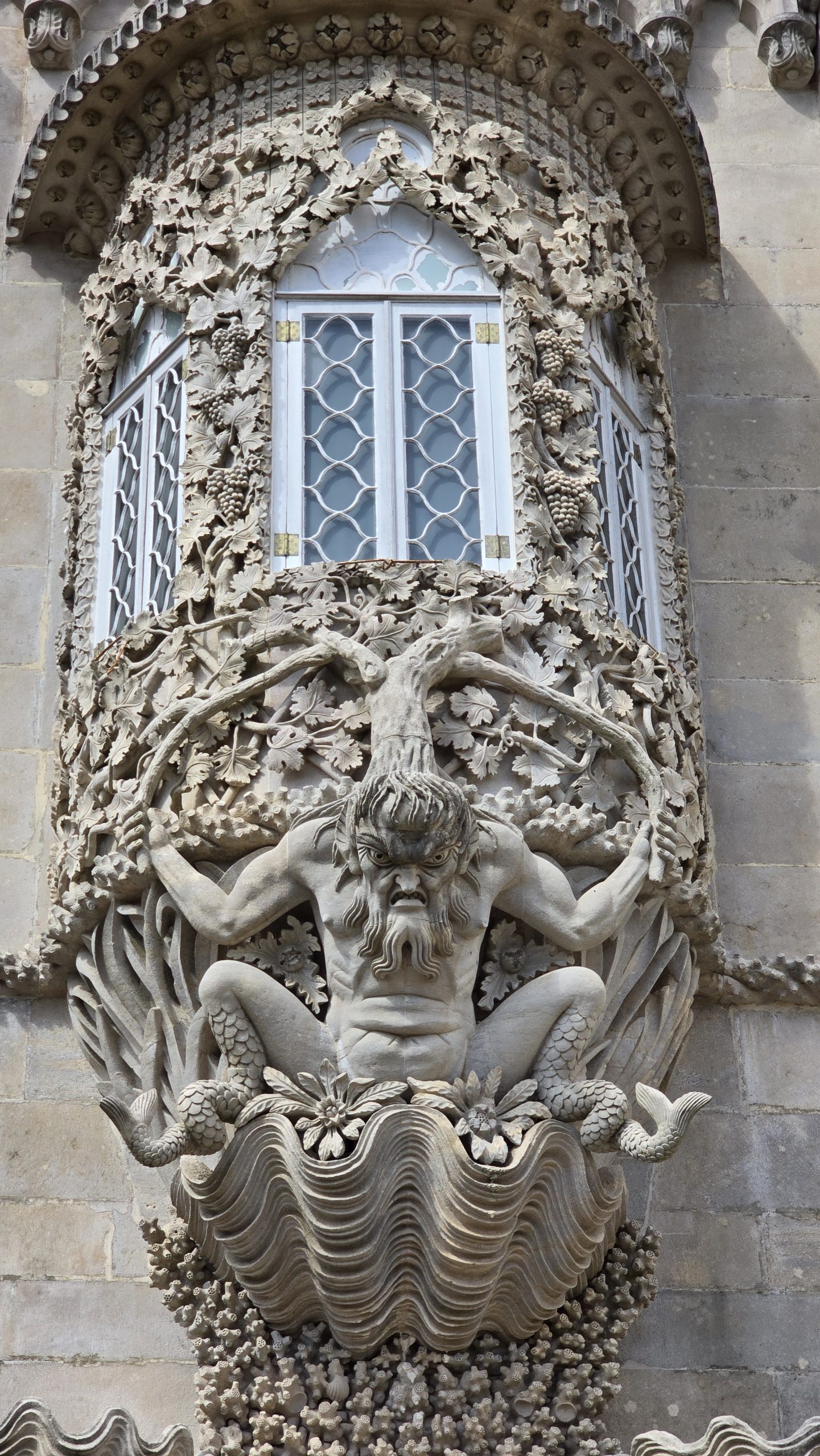
The palace is still worth it. Buy your timed tickets in advance, go early, and try to enjoy the people-watching. From the terraces you can look down on the Castelo dos Mouros, the Moorish Castle, its walls snaking along the ridge for more than a thousand years. On a clear day you can see the Atlantic.
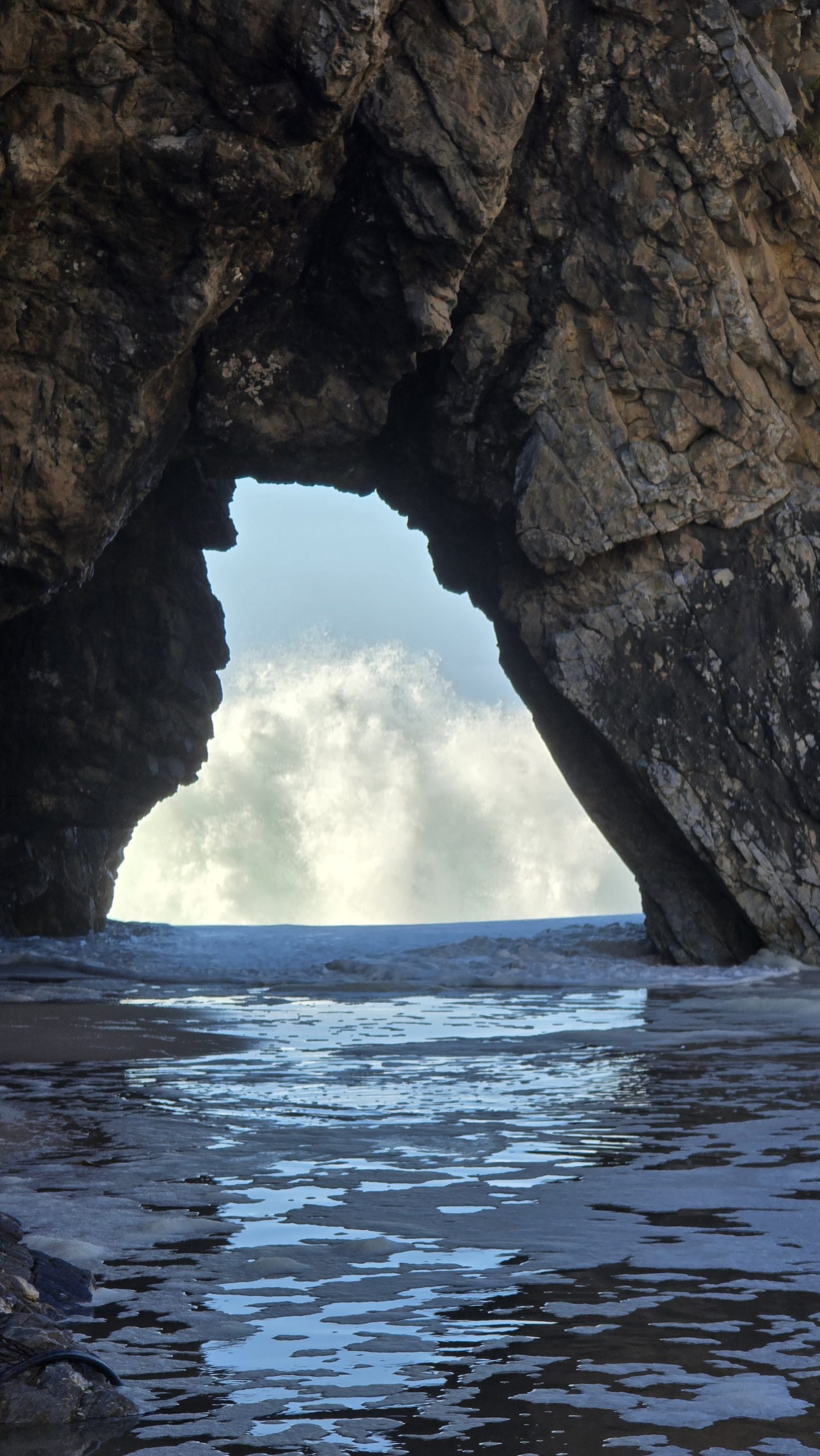
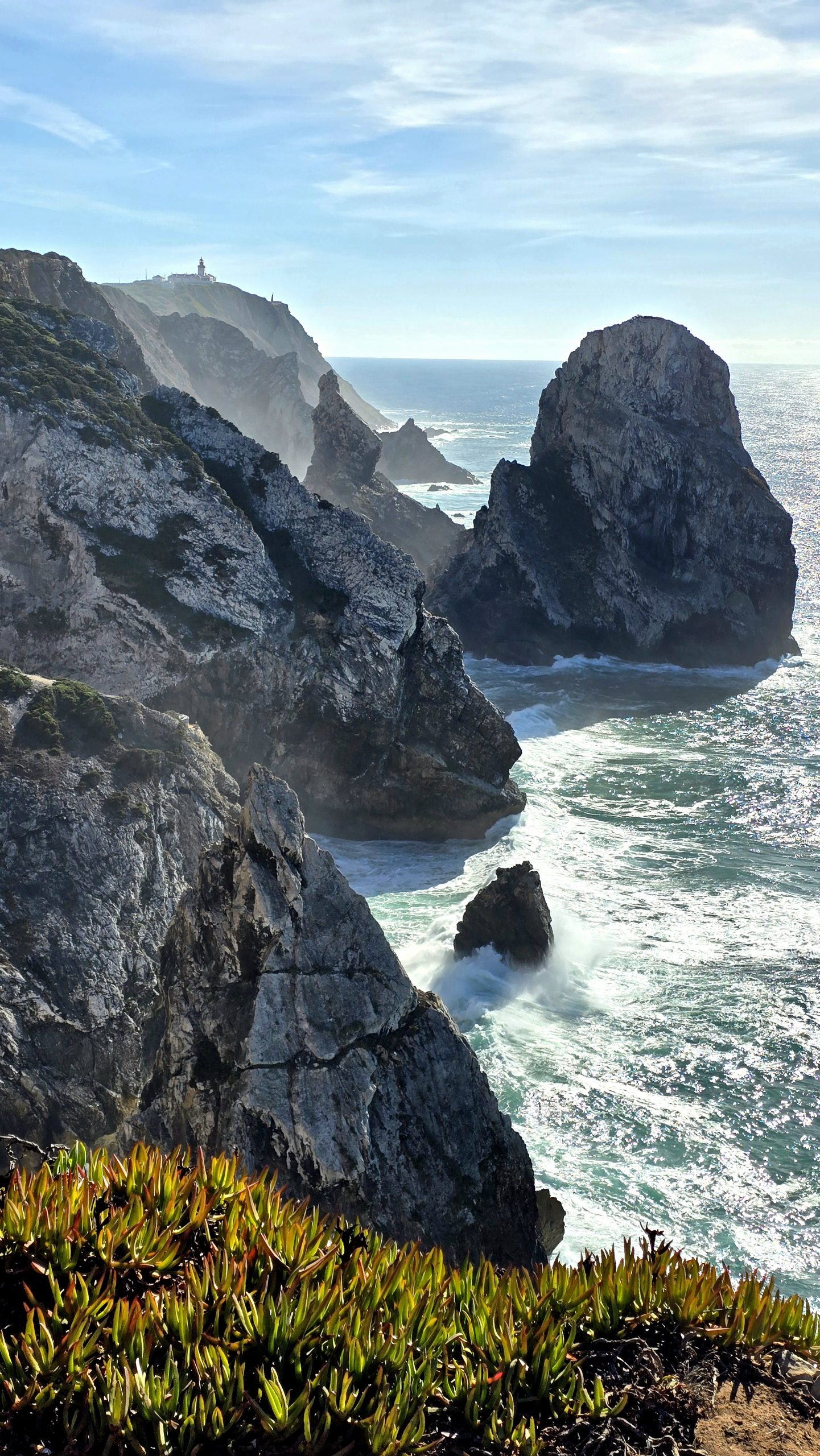
From Sintra we went down to the coast by Jeep through backroads, where the Atlantic batters a line of cliffs with real enthusiasm. The Praia da Adraga has a natural rock arch that frames the surf like a picture window. Down the coast, a lighthouse marks Cabo da Roca, the westernmost point of mainland Europe. Next stop: the United States, eventually.
Peniche: Where the Jokes Stop
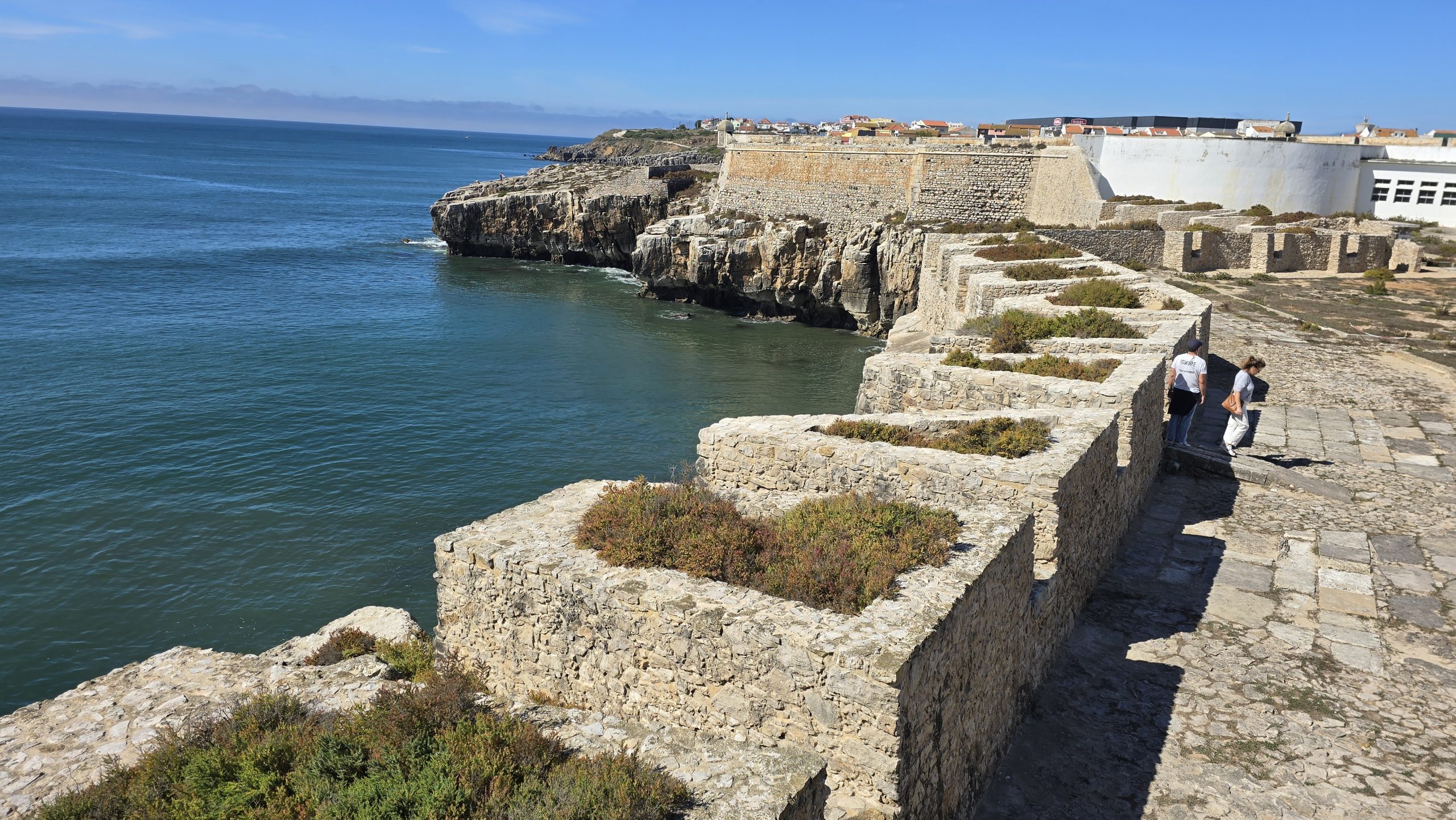
Peniche is a fishing town on a peninsula north of Lisboa, best known today for surfing. Its waterfront fortress has a darker past. From 1934 to 1974 it was the most notorious political prison of the Salazar dictatorship. Opponents of the regime were held there, interrogated, and isolated. In 1960, a group of prisoners including the Communist Party leader Álvaro Cunhal escaped in the largest breakout in the prison’s history.
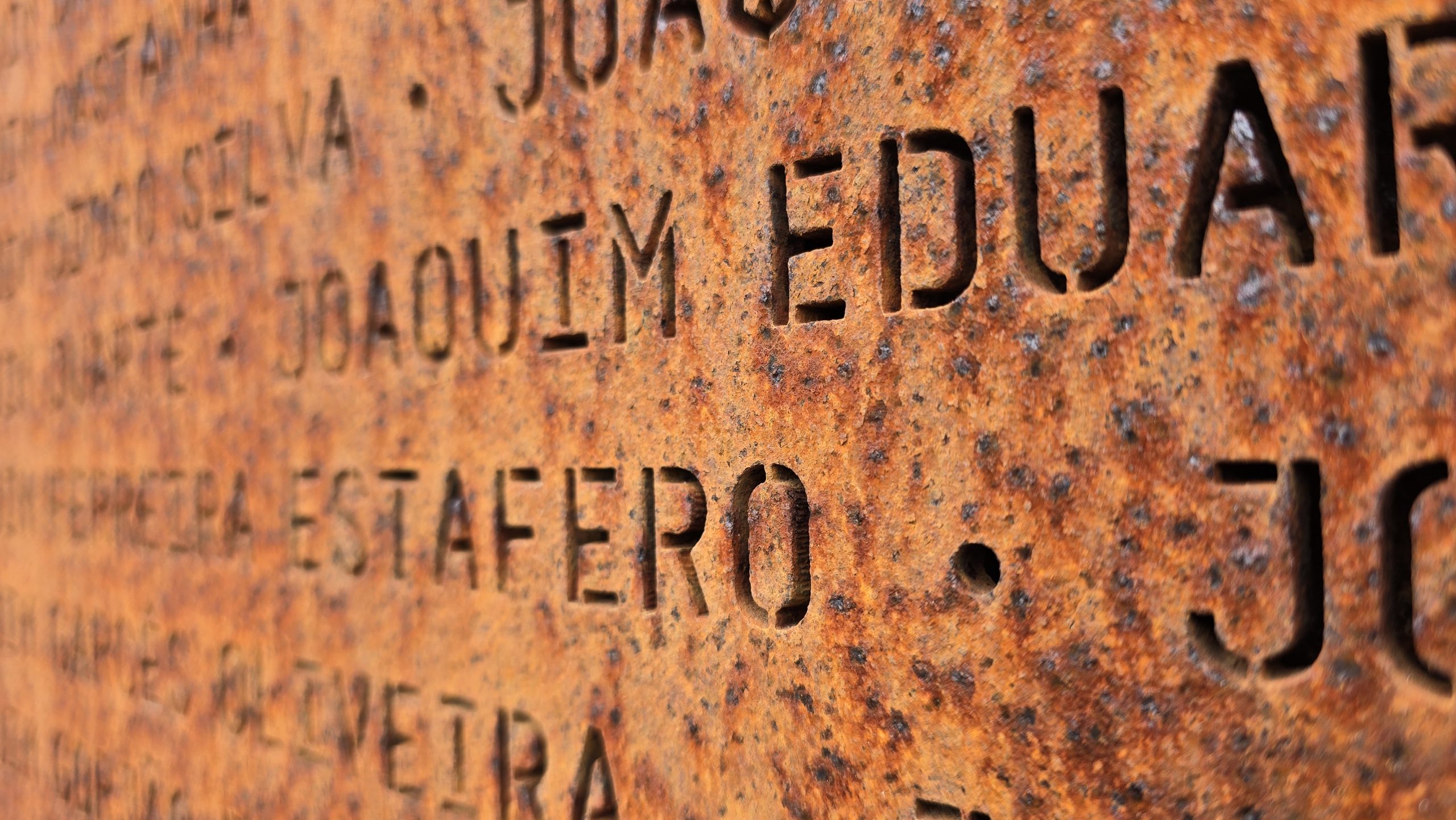
Today it houses the National Museum of Resistance and Freedom. At the entrance stands a large rusted-steel memorial engraved with the names of the people who were imprisoned there. The rust seems deliberate. Freedom in Portugal is only 52 years old, and a great many people still remember the alternative.
Óbidos: Sleeping in a Castle
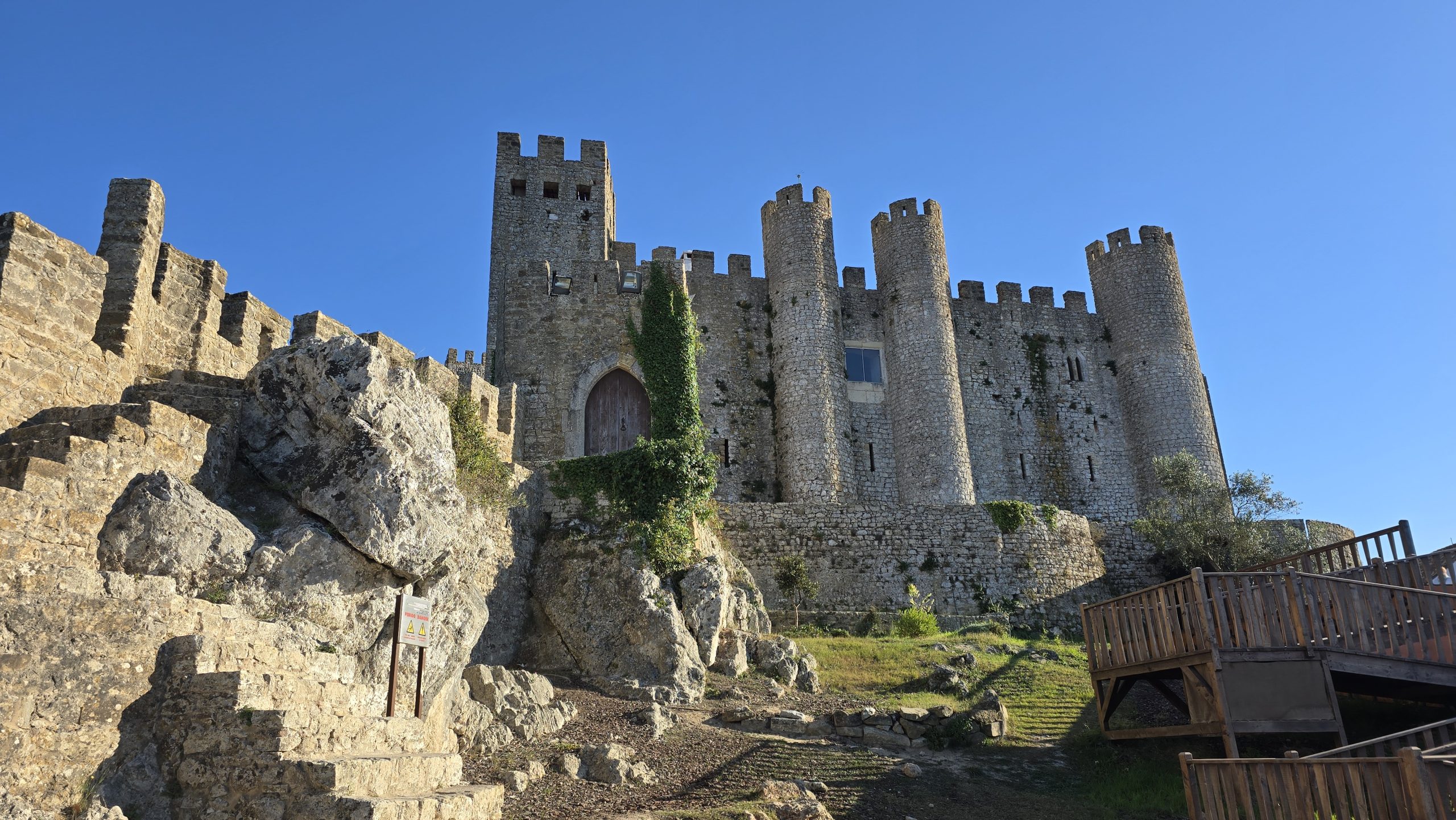
Óbidos is a perfectly preserved medieval village of whitewashed houses with blue and yellow trim, completely encircled by its castle walls. In 1282, King Dinis gave the town to his bride, Queen Isabel, as a wedding present, and it remained the property of Portuguese queens for centuries. It’s still sometimes called the Vila das Rainhas, the Town of Queens.
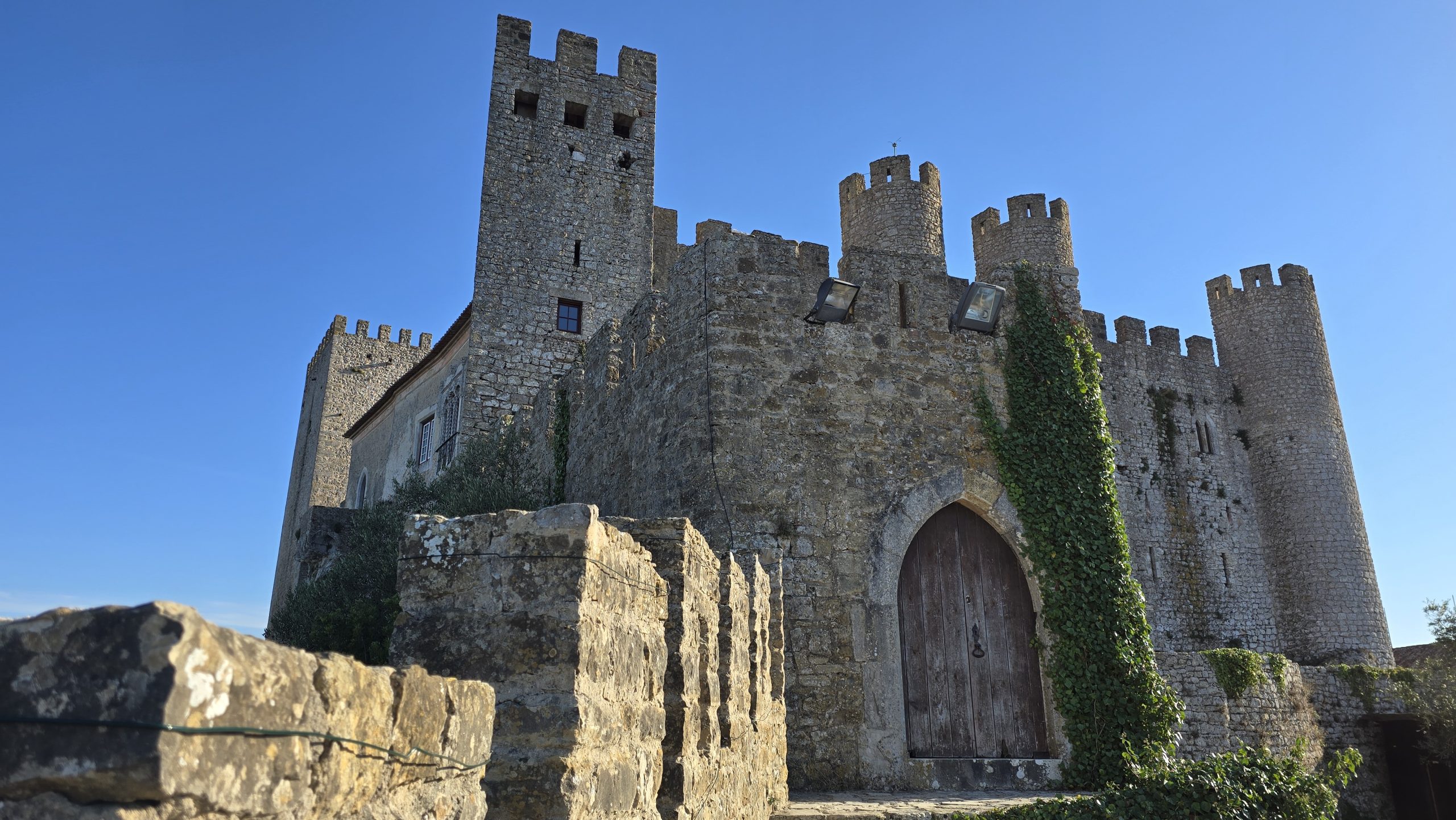
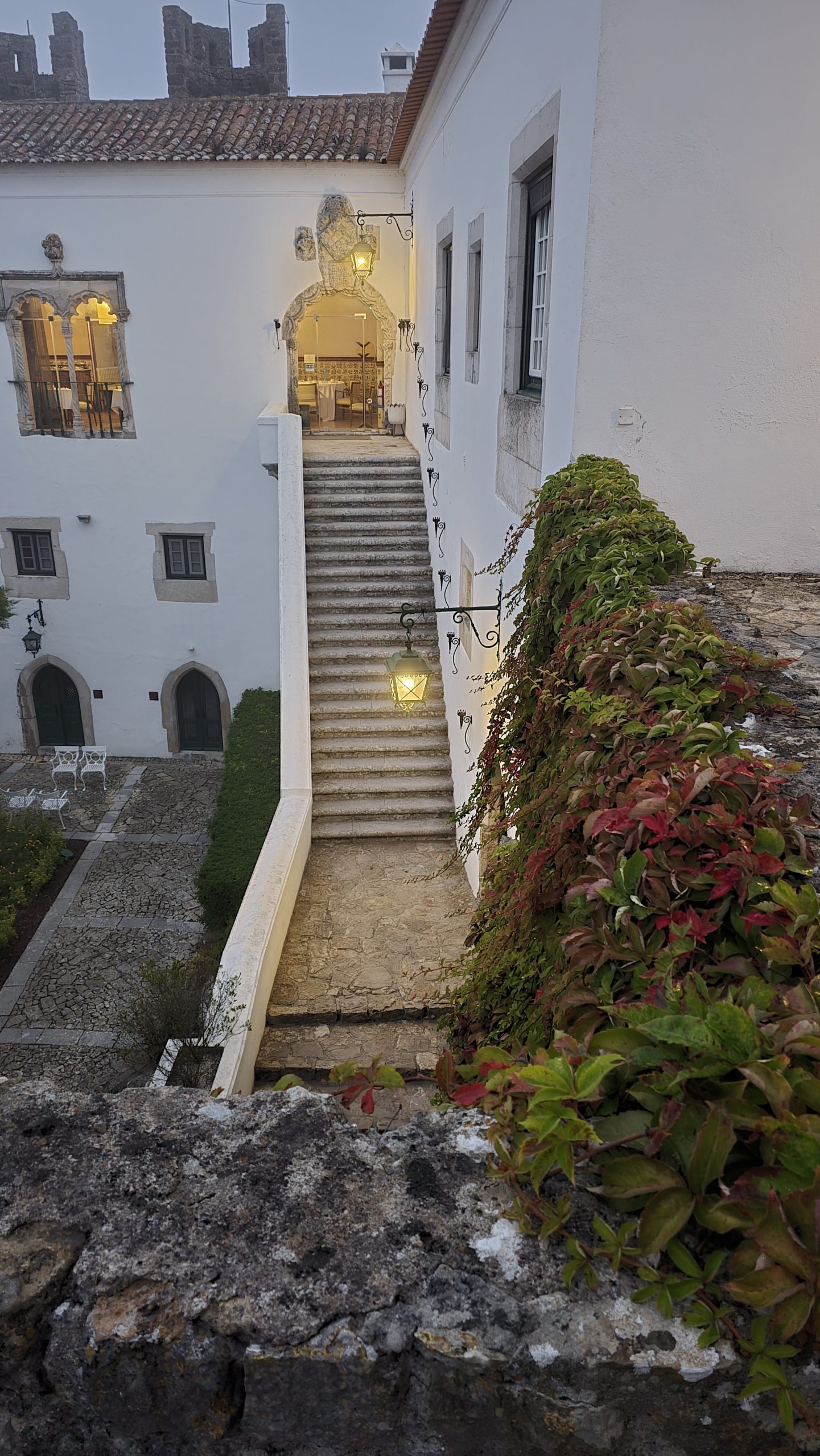
We stayed inside the castle. The Pousada do Castelo is a hotel built into the old fortress, and our room was in one of the towers. Its window was a balistraria, an embrasure: a narrow slit in a thick stone wall, designed so archers could shoot out while nobody could shoot in. This makes for an excellent defensive position and a somewhat limited view. The staff couldn’t have been nicer, and they gave us two restaurant recommendations that turned out to be among the best meals of the trip (more on those below).
The walls of Óbidos are walkable, and the evening light on them is gorgeous. They’re also narrow, uneven, and in many places have no railing on the town side. It’s a full-contact medieval experience. Watch your step.
Nazaré: The Biggest Waves in the World
Nazaré is a fishing town with a reputation out of all proportion to its size: off its headland, an undersea canyon focuses winter swells into some of the largest waves ever surfed, more than 80 feet. October is the start of the big-wave season. We did see big waves, though not the monsters, and through a thick fog that made them sound bigger than they looked.
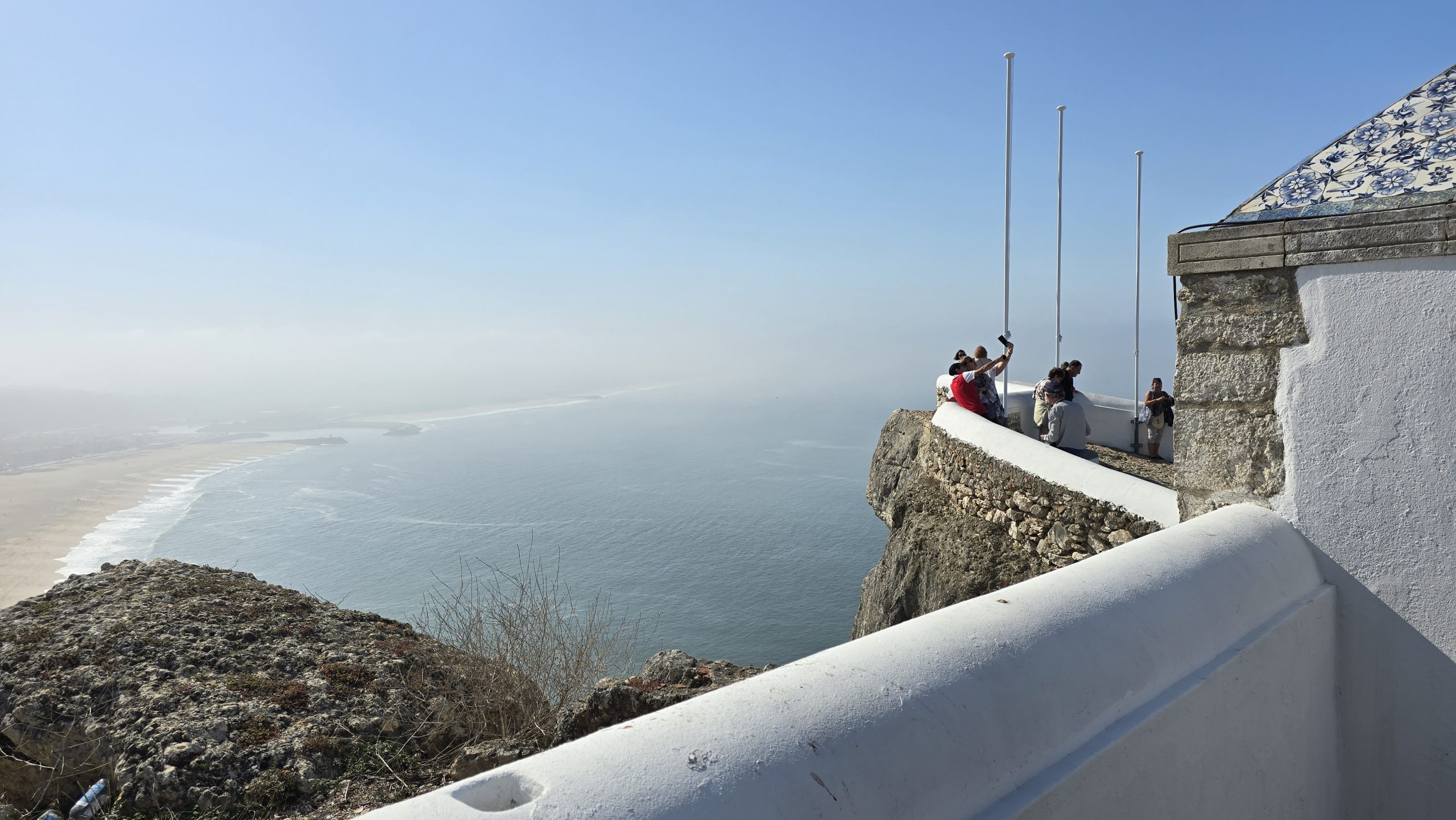
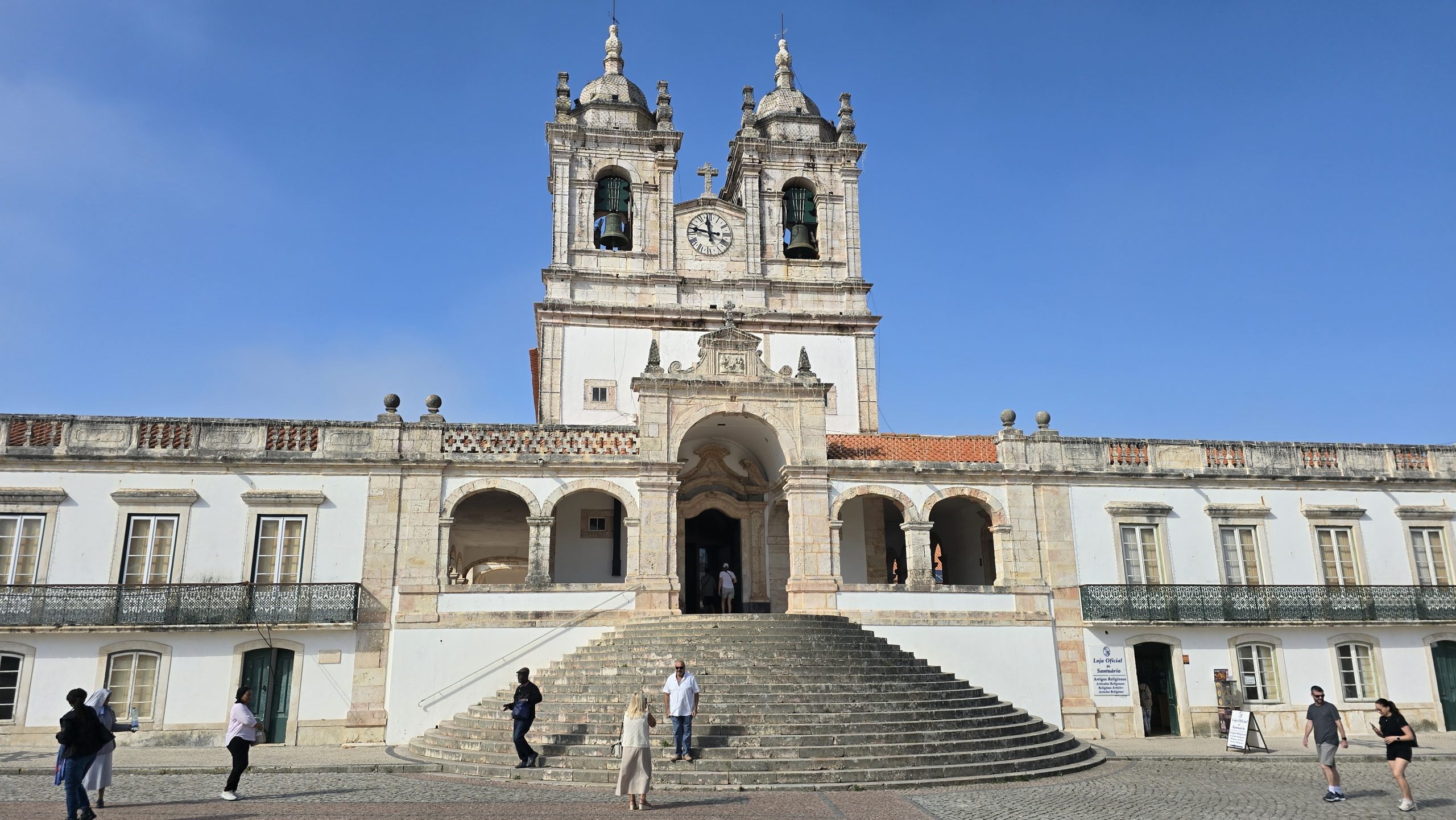
The upper town, the Sítio, sits on a cliff high above the beach. Its sanctuary commemorates a legend in which a nobleman named Dom Fuas Roupinho was chasing a deer in the fog, and the Virgin Mary stopped his horse at the very edge of the cliff. We took a more conventional route to the lookout, which I’d recommend.
Nazaré is also where I had my first sighting of a Portuguese treat whose name, to American ears, sounds like a bathroom joke: farturas. They’re fat, fried, sugared spirals of dough, like an oversized churro and sometimes filled. I promise they taste much better than they sound. Hold that thought; they come back at the most expensive dinner of the trip.
Mealhada: The Town That Runs on Pig
Between Óbidos and Porto lies Mealhada, a town in the Bairrada wine region that seems to serve one thing: leitão, roast suckling pig, crackling-skinned and peppery. Restaurant after restaurant along the main road advertises the same specialty, and nobody seems to mind. We stopped at Rei dos Leitões (“King of the Suckling Pigs”), which has been roasting them since 1947 and is listed in the Michelin Guide. This was not on the itinerary. Pedro, our host at Nova Casa de Ramiro in Óbidos, insisted we stop there, and after the meal he’d served us we weren’t about to argue. So we paid for an extra hour and a half of detour and bought lunch for our driver, Gustavo, who was a prince about the whole thing.
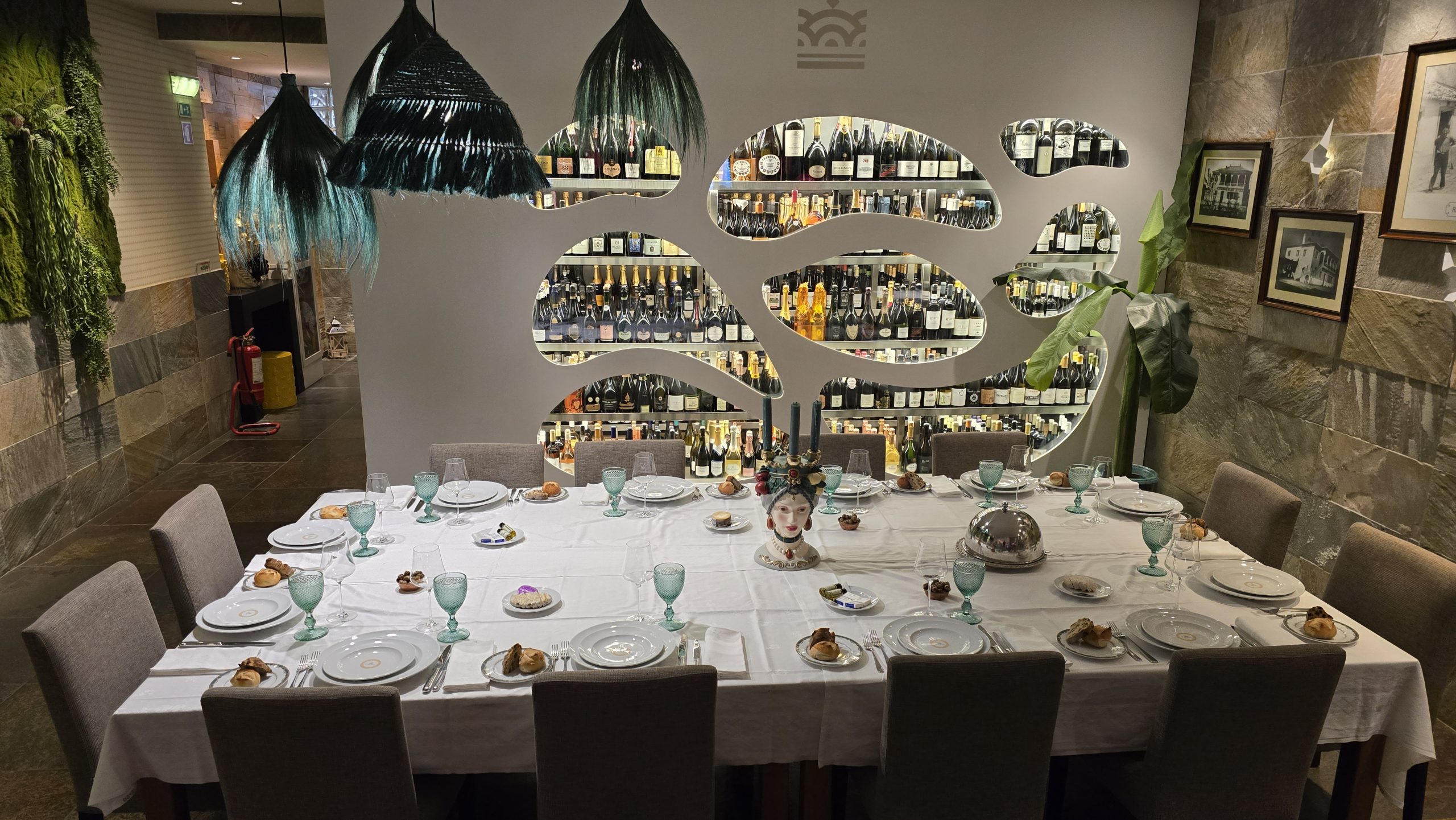
The pig was everything it was promised to be: crackling, crispy skin over a creamy layer of fat, and tender meat underneath. The surprise was the wine list, which was less a list than a Sears catalog. With a sommelier at the table, nobody was complaining. I don’t remember which wine we ordered. It was local, and it was delicious, which is probably all you need to know about Bairrada wine.
The Douro Valley: Where Port Comes From
The Douro Valley is one of the oldest demarcated wine regions in the world (1756) and a UNESCO World Heritage landscape: steep terraced vineyards stacked up the sides of the river canyon like the contour lines of a topographic map. It’s where the grapes for port are grown, and it is breathtaking. We took an all day trip (by car) through the region, and it included a one hour boat trip along the Douro river.
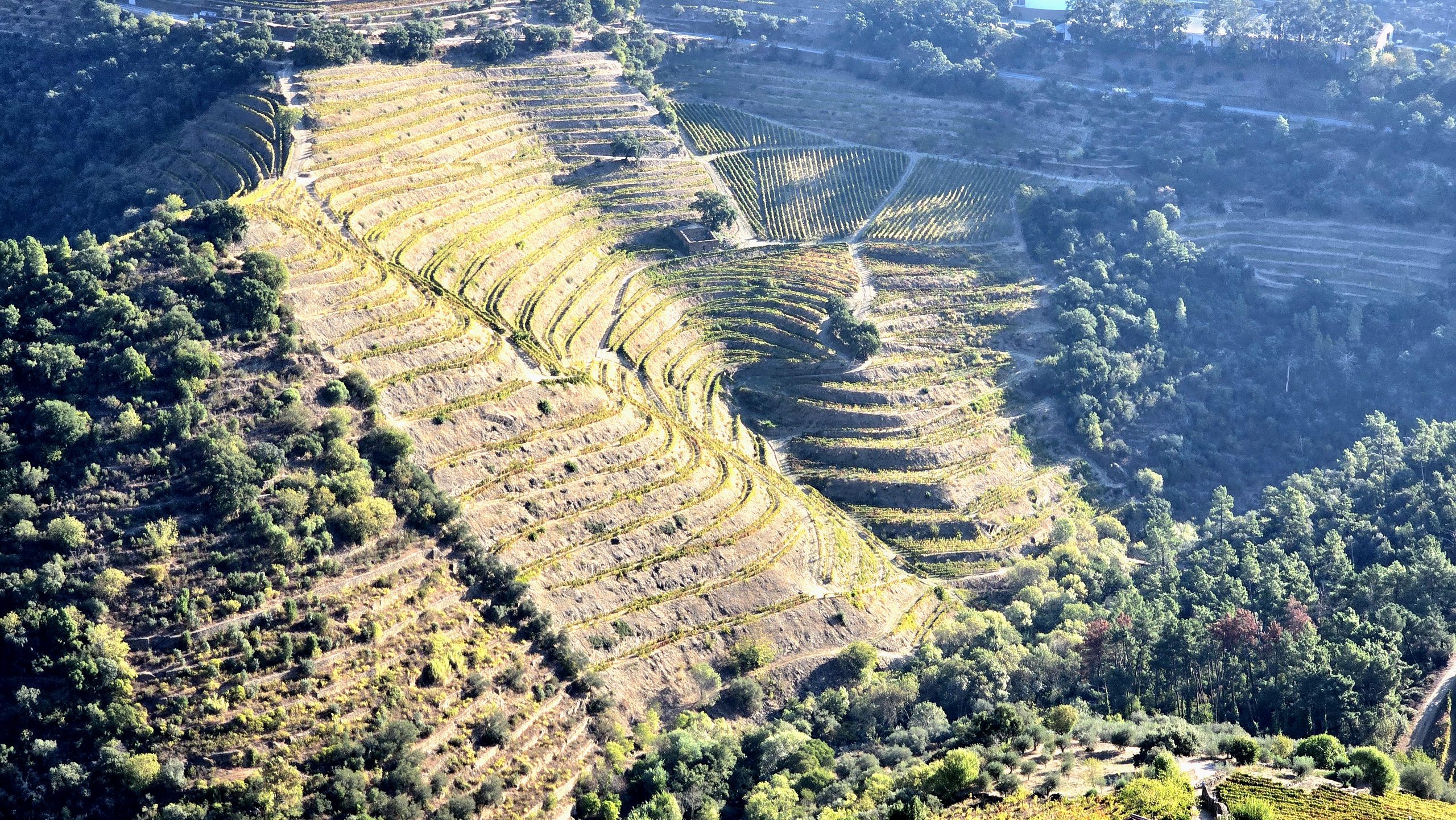
In the Douro we visited Mãos e Irmãos, where the winemaker, Rafael Ribeiro, was our host. Visiting a winery with a sommelier is a little like visiting a museum with an art historian: you see twice as much and understand three times as much. Oddly, the grounds themselves are fairly nondescript, but the view over the valley is lovely, and the real attraction was Rafa himself. They grow all the crops used in the restaurant on site, including the animals. He had many amusing things to say, and he insisted that I actually drink every pour rather than taste and dump. I believe the plan was to taste six wines. I’m fairly sure it ended up being eight. Possibly more. My notes get less reliable toward the end. Rafa’s hospitality and our son’s enthusiasm made it a thoroughly wonderful experience. Rafael also gave us restaurant recommendations, many of them, and every single one was awesome. That’s how we found Tascö in Porto (more on that below).
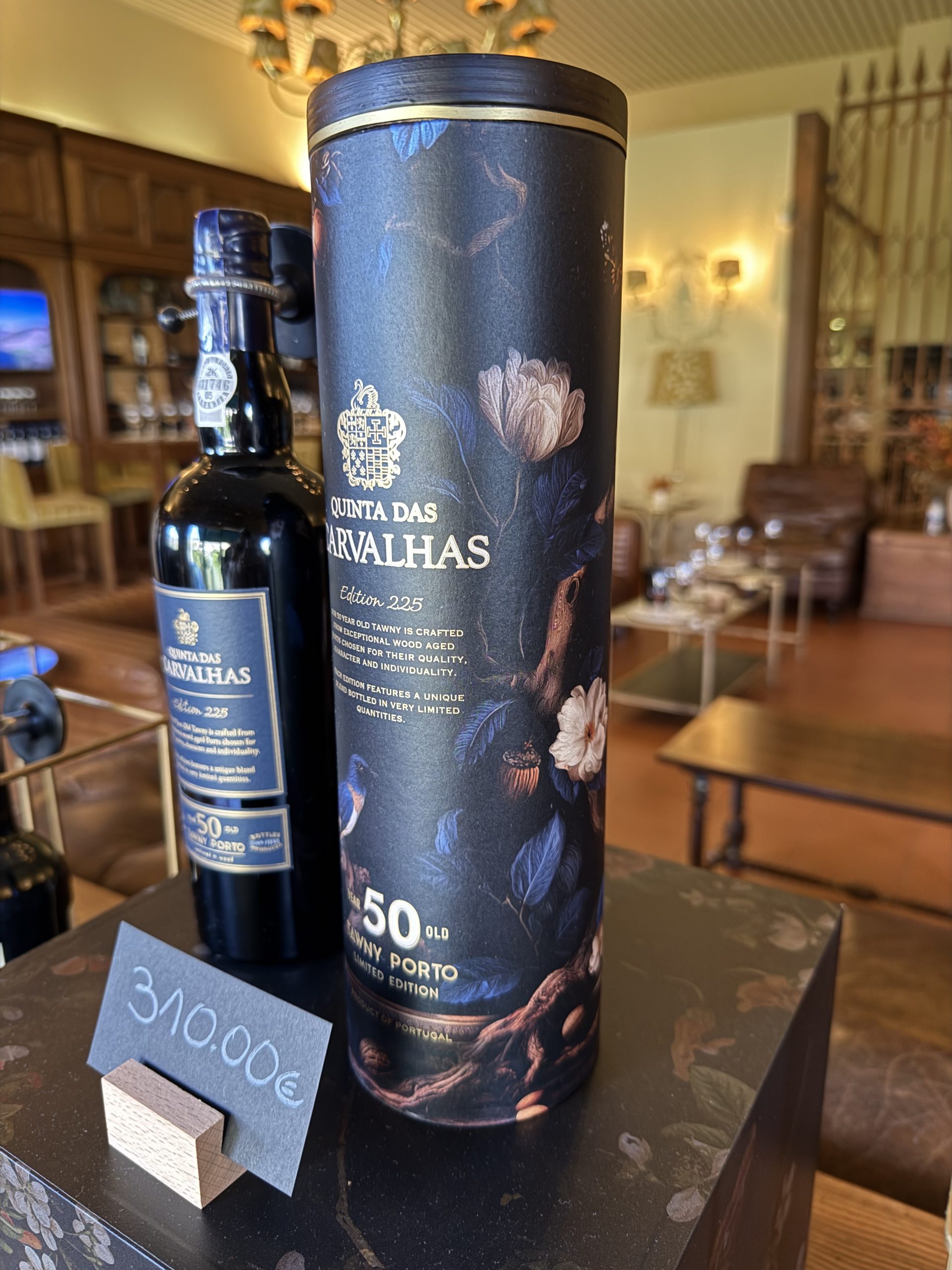
Somewhere between the Douro and the port lodges of Gaia, the second story arc reached its climax. I’d always thought of port as sweet, syrupy stuff that comes out at the end of a dinner party, mainly because I’d only ever had the cheaper ruby kind. Twenty-year-old Tawny is a different animal. It spends decades in wooden casks, slowly oxidizing, until it tastes of toasted nuts, caramel, dried figs, and orange peel. It’s smooth, complex, and only as sweet as it needs to be. I was converted. The Port tasting experience was at two locations along the Douro River. Most notable was: Quinta das Carvalhas. Sadly, I didn’t bring any home. My wallet, for reasons that have nothing to do with port, still hasn’t forgiven me.
Porto: The Ancient San Francisco
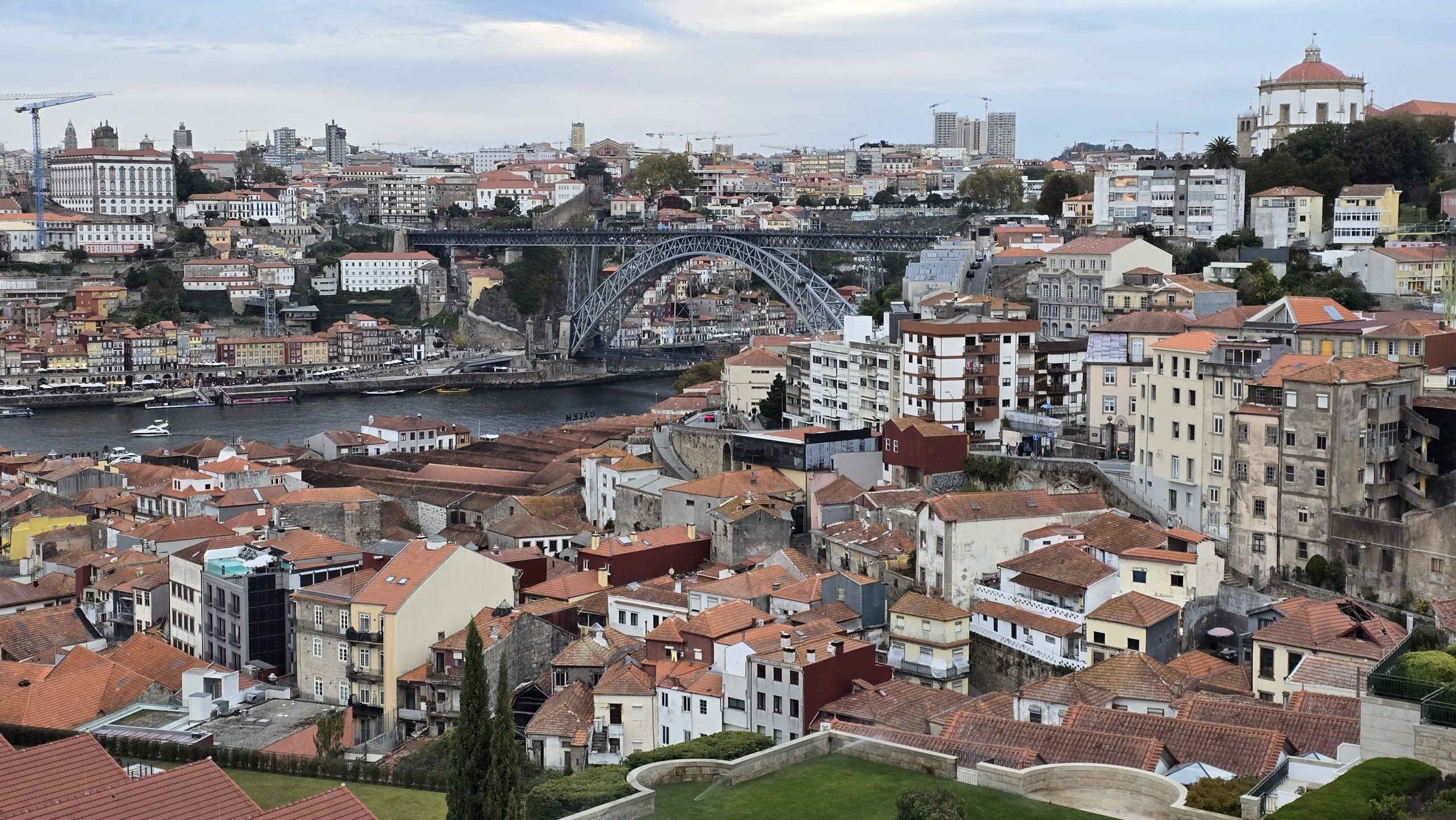
If Lisboa reminded us of San Francisco, Porto is San Francisco, if San Francisco had been around for 2,000 years and not bothered to flatten anything. The city tumbles down steep hills to the Douro River in a jumble of tiled façades, church towers, and staircases. There are cable cars (well, a funicular), there are hills that make Nob Hill look like a speed bump, and across the river in Vila Nova de Gaia there are the port lodges, which San Francisco would kill for.
Our walking tour covered about 4.5 miles. I didn’t turn on the GPS tracker until we were about ¾ of a mile in. The track shows where we went, and the places where it lingers and wobbles are where we went inside churches, bookstores, and train stations, which GPS satellites can’t see into.
Porto walking tour track, October 17, 2026 (tracking began about ¾ mile in) • StarCircleAcademy.com
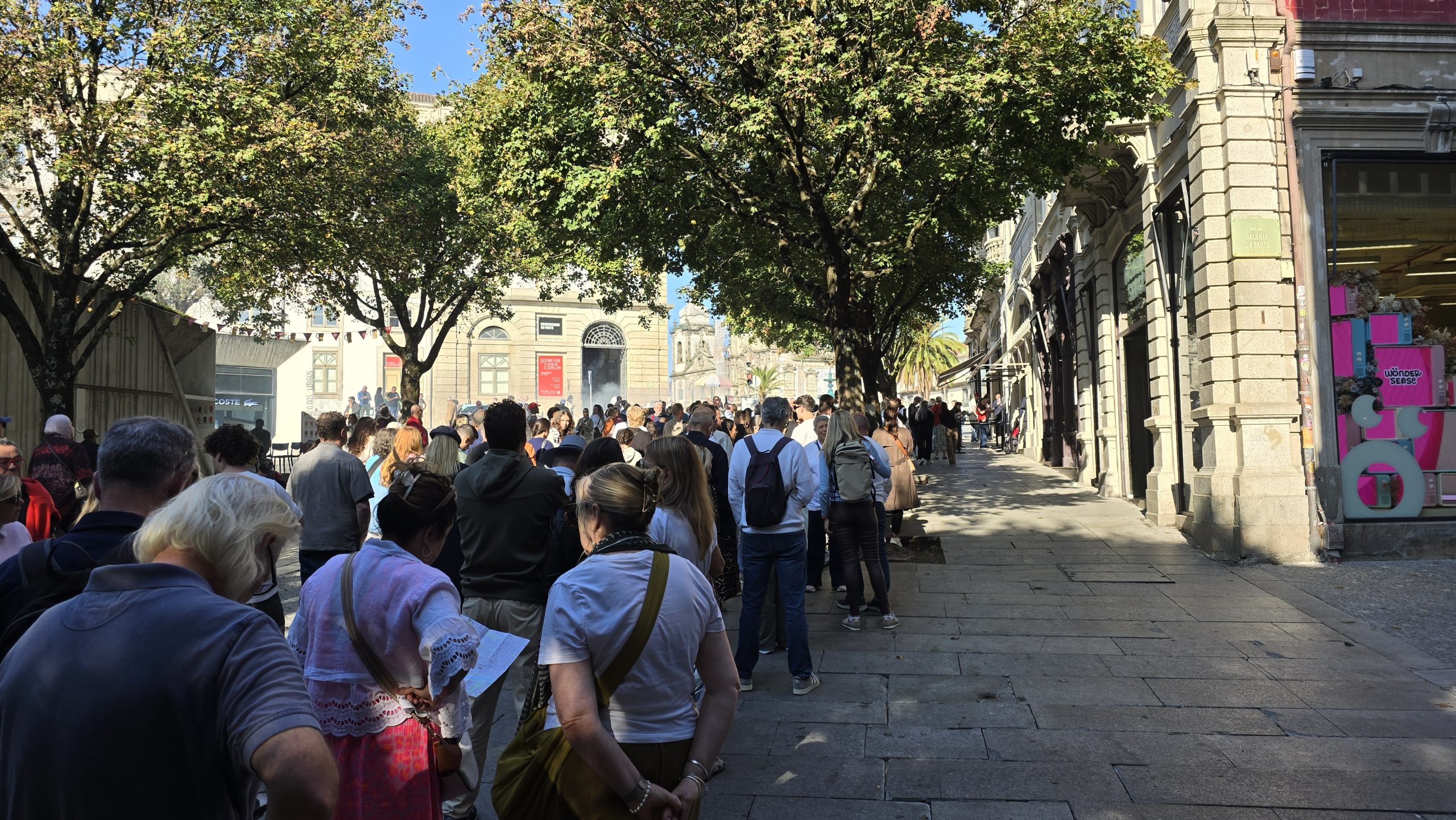
Livraria Lello, opened in 1906, is often called the most beautiful bookstore in the world, and it may be. The ornate ceilings, the stained-glass skylight, and the famous red forked staircase look like something out of a fantasy novel. They’re also not what they seem. The “carved wood” ceilings are actually painted plaster, and the curving staircase, which looks like it was whittled from a single enormous tree, is reinforced concrete. The illusion is so good that most visitors never suspect. That resemblance is the source of a persistent rumor that J.K. Rowling, who lived in Porto in the early 1990s, used Lello as the inspiration for Hogwarts. Rowling has said that she never set foot in the place. This has not shortened the line at all.
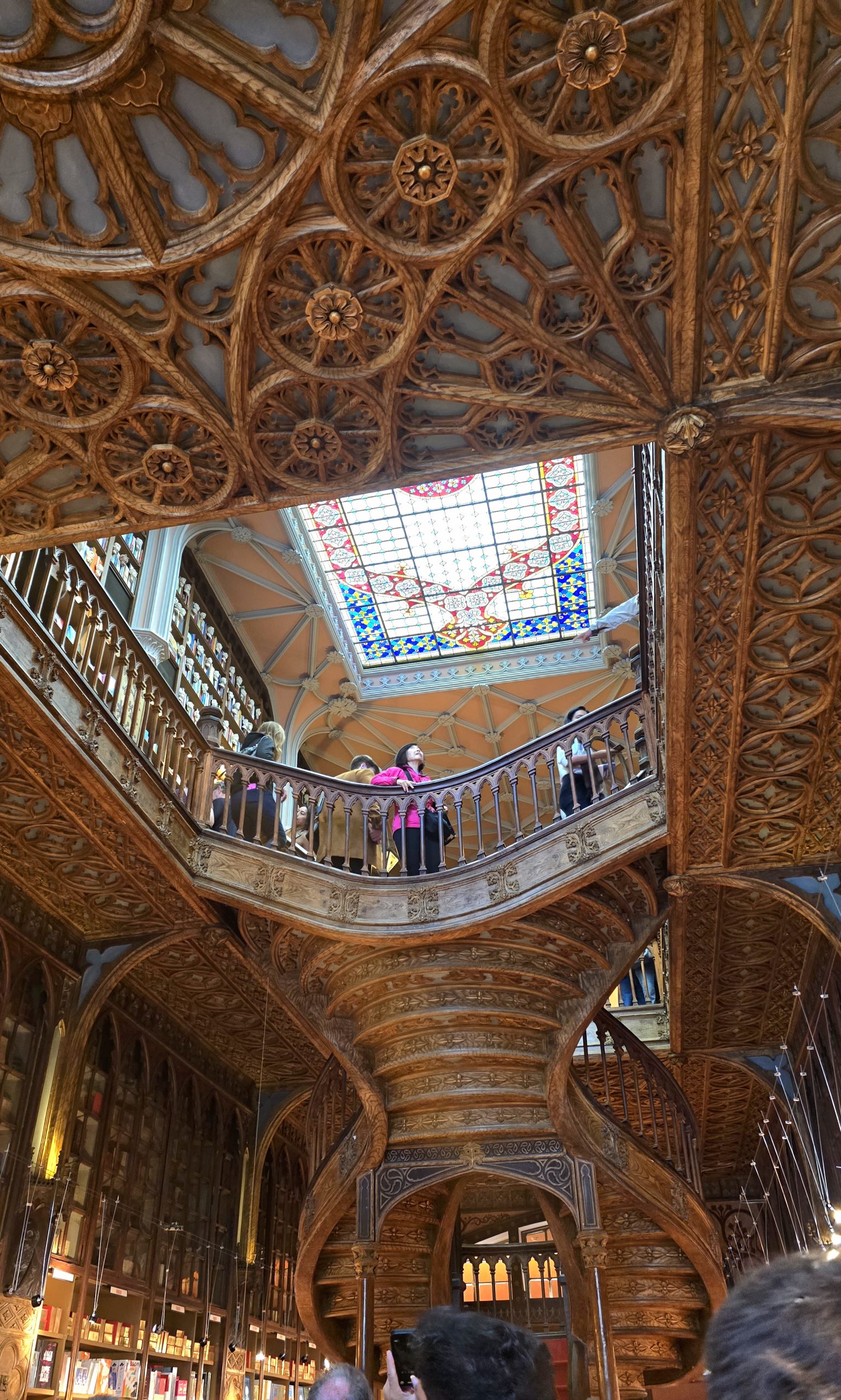
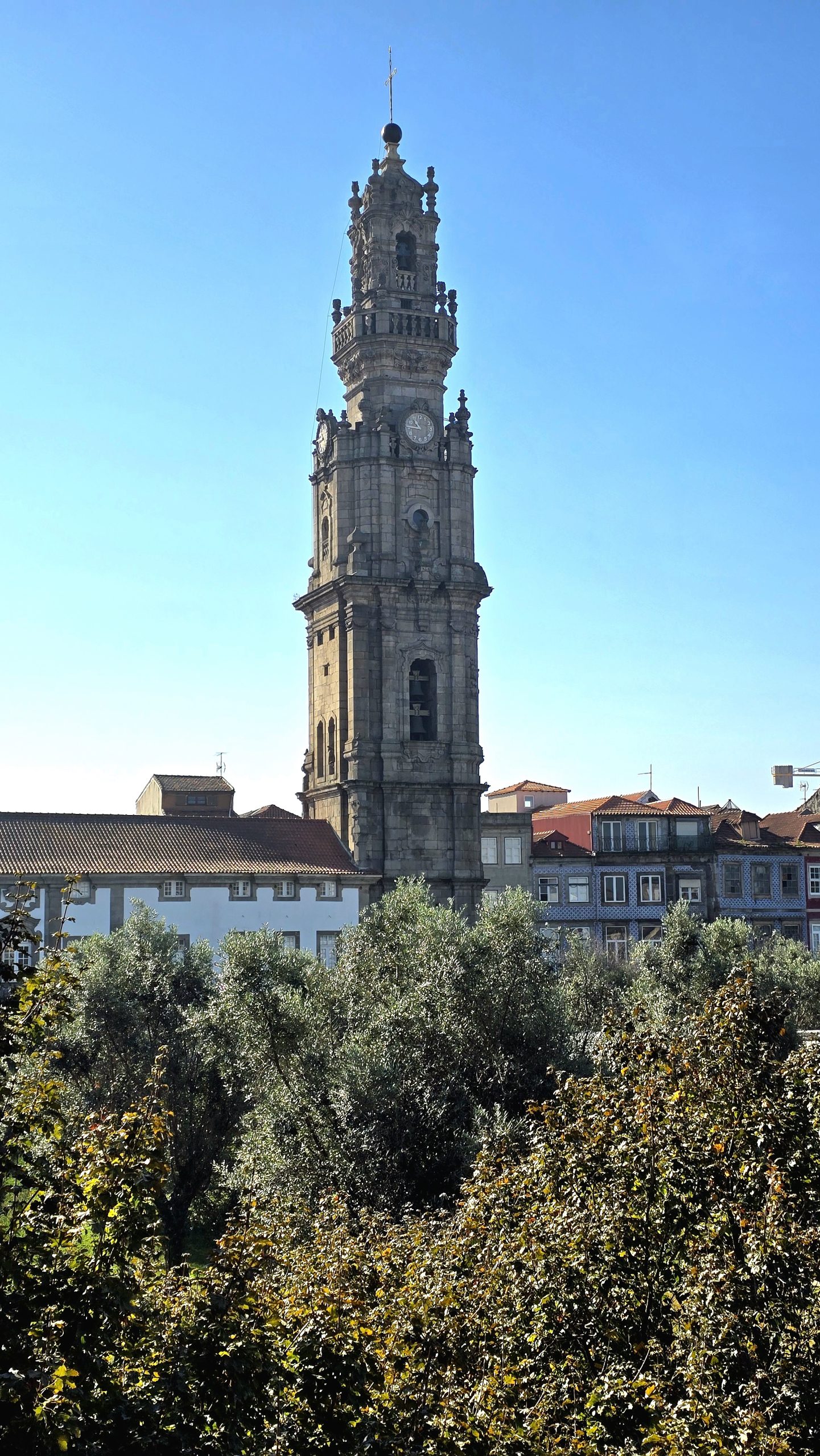
We spent the better part of 90 minutes inside Lello. Skipping the line didn’t mean skipping the crowd; inside, it was wall-to-wall people. The craftsmanship alone, wood or not, is worth the elbowing. Just outside is the Clérigos Tower, a baroque bell tower that has been Porto’s landmark since 1763.
Gold, Tiles, and Towers
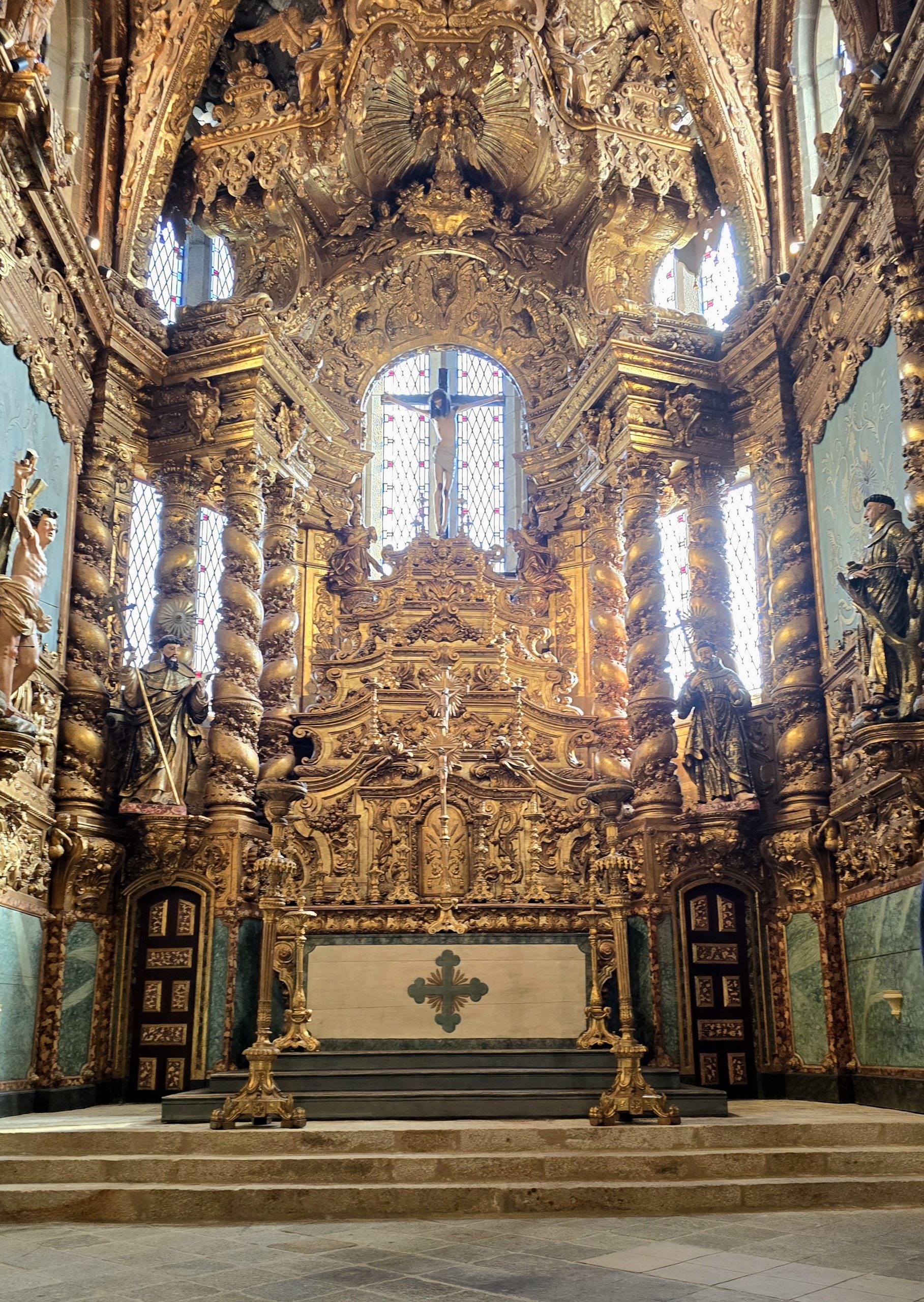
The Igreja de São Francisco looks like an ordinary Gothic church from the outside. Inside, nearly every surface is carved wood covered in gold leaf. Photos aren’t allowed, but somehow I have one. Down the hill, São Bento Station is a working railway station whose entrance hall is lined with about 20,000 hand-painted blue-and-white azulejo tiles by Jorge Colaço, depicting battles, royal weddings, and country life. Every train station should be like this. None are.
We ended the tour at the Majestic Café on Rua de Santa Catarina, an Art Nouveau café from the 1920s with carved wood, mirrors, and cherubs. It’s an interior designer’s playground, and ours had flown home that morning. She would have loved it.
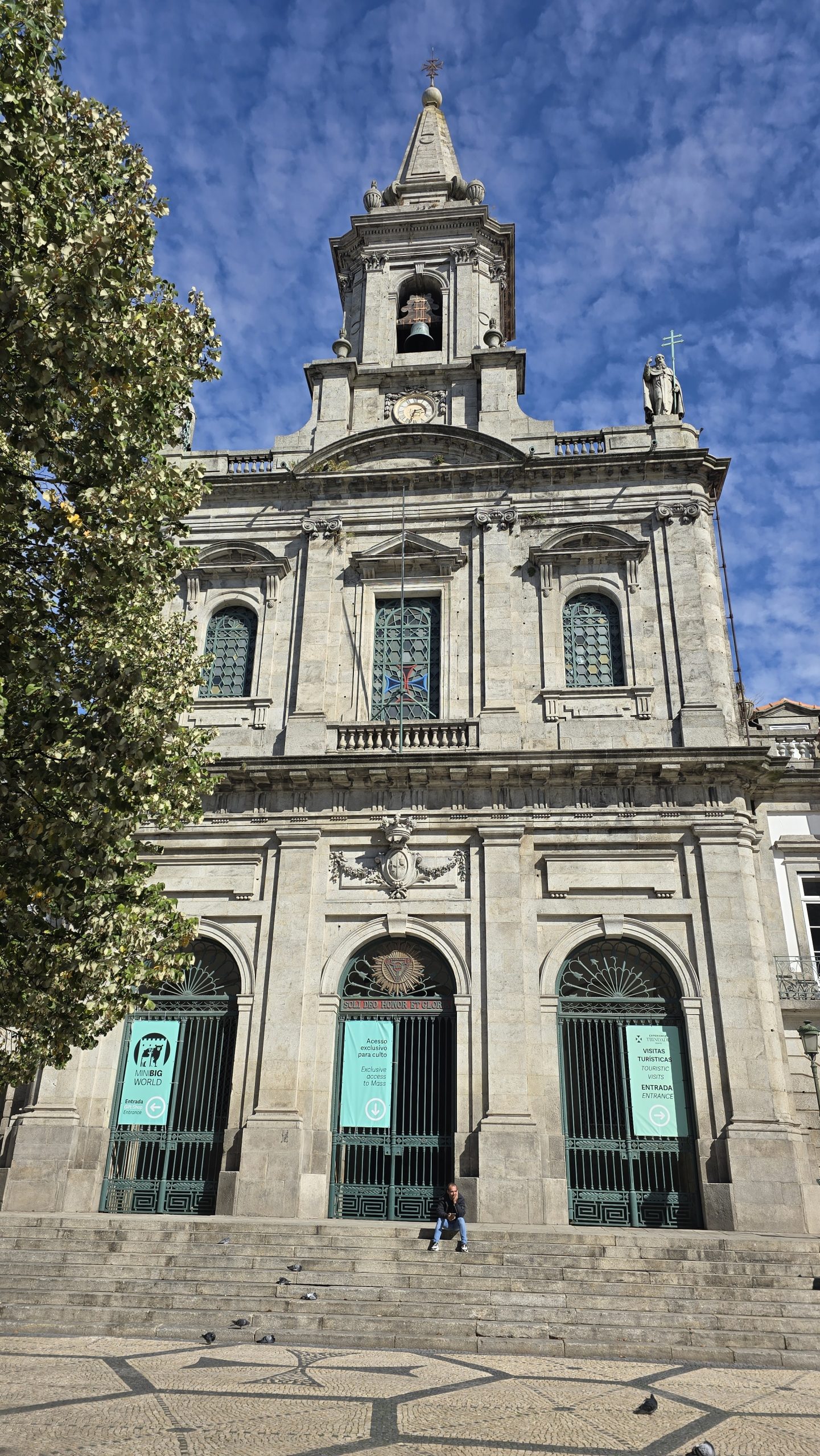
The Portuguese Massage
Early in the trip, one of our party had a stumble in Lisboa that left a knee unhappy, so by Porto we were taking a lot of Ubers. The rides were short (usually less than a mile) and cheap. They were also strangely long relative to the actual distance: thanks to the narrow, one-way streets, the walking distance was often about a quarter of the driving distance. The catch is that the walk is usually straight up a hill. Many of the turns are so tight that our drivers had to stop, back up, and try again.
And every driver, without exception, had the same name for the cobblestone streets: the “Portuguese massage.” Our knees did not give them a good review.
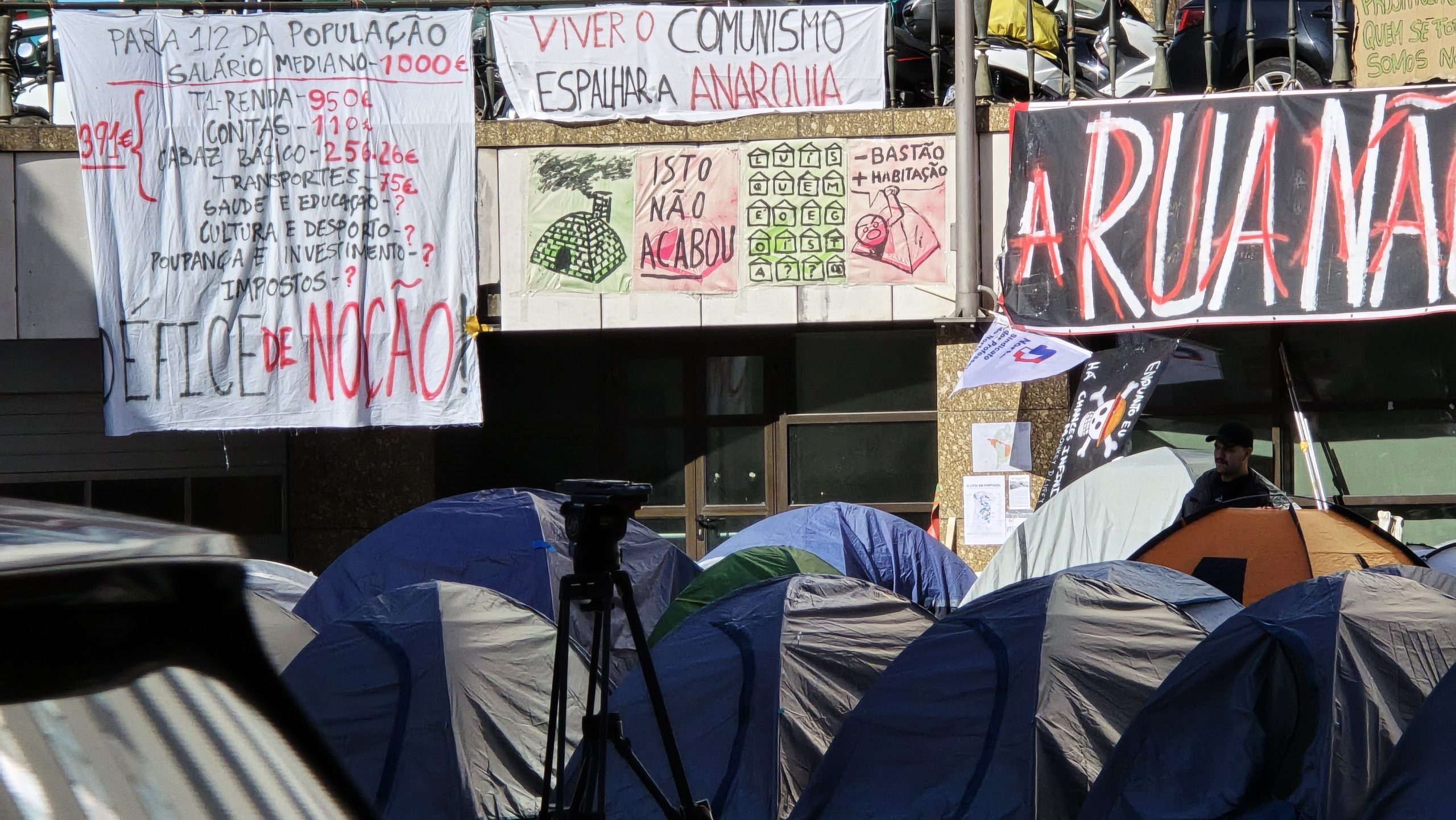
Porto had its own housing protest: an encampment of tents beneath hand-painted banners. The large white one at left lays out the household budget for half the population: a median salary of €1,000 against €950 for a one-bedroom apartment, €110 for utilities, €256.26 for a basic basket of groceries, and €75 for transportation. After that come health and education, culture and sport, savings, and taxes, each followed by a question mark. Other signs read Isto não acabou (“This isn’t over”) and − Bastão + Habitação (“Less baton, more housing”), the baton being the police kind. One spelled out, one letter per little house, Luís, quem é o egoísta? (“Luís, who’s the selfish one?”), presumably aimed at Prime Minister Luís Montenegro. The long black banner across the front declared A rua não tem medo da retaliação, “The street is not afraid of retaliation.” Another quoted Uma Casa Portuguesa, the beloved Amália Rodrigues fado about a humble Portuguese home with its “four whitewashed walls.” That’s a pointed reference when you can’t afford the four walls. A third offered the philosophy that “violence is the only argument of ignorance.” A hand-lettered cardboard sign said Não passarão, “They shall not pass”: the Portuguese version of ¡No pasarán!, the rallying cry of the Spanish Civil War, which this Spanish speaker had no trouble translating. A more radical banner urged passersby to “live communism, spread anarchy,” which was a striking insight given what I learned about the rise of communism in Eastern Europe in our previous trip. Nobody particularly wanted what communism brought them (oppression and loss of freedom) – but everyone desperate for food, housing, a job and security wants something they hope is better.
It was peaceful while we were there, but it didn’t stay that way. In the early hours of October 25, a few days after we flew home, police moved in with batons to clear the housing camps in both Lisboa’s Rossio Square and Porto’s Praça D. João I, the square in our photo. Police reported 31 arrests for disobedience; a spokeswoman for the Porto camp reported 37 minor injuries. The protesters are asking for a reversal of the new tenancy law, an end to evictions of people with nowhere else to go, limits on purchases by real-estate funds, rent caps, and the rehabilitation of vacant buildings. They say they’ll be back. In hindsight, “Less baton, more housing” and “The street is not afraid of retaliation” read less like slogans than forecasts. (Euronews has the story.)
Black Capes and Busking
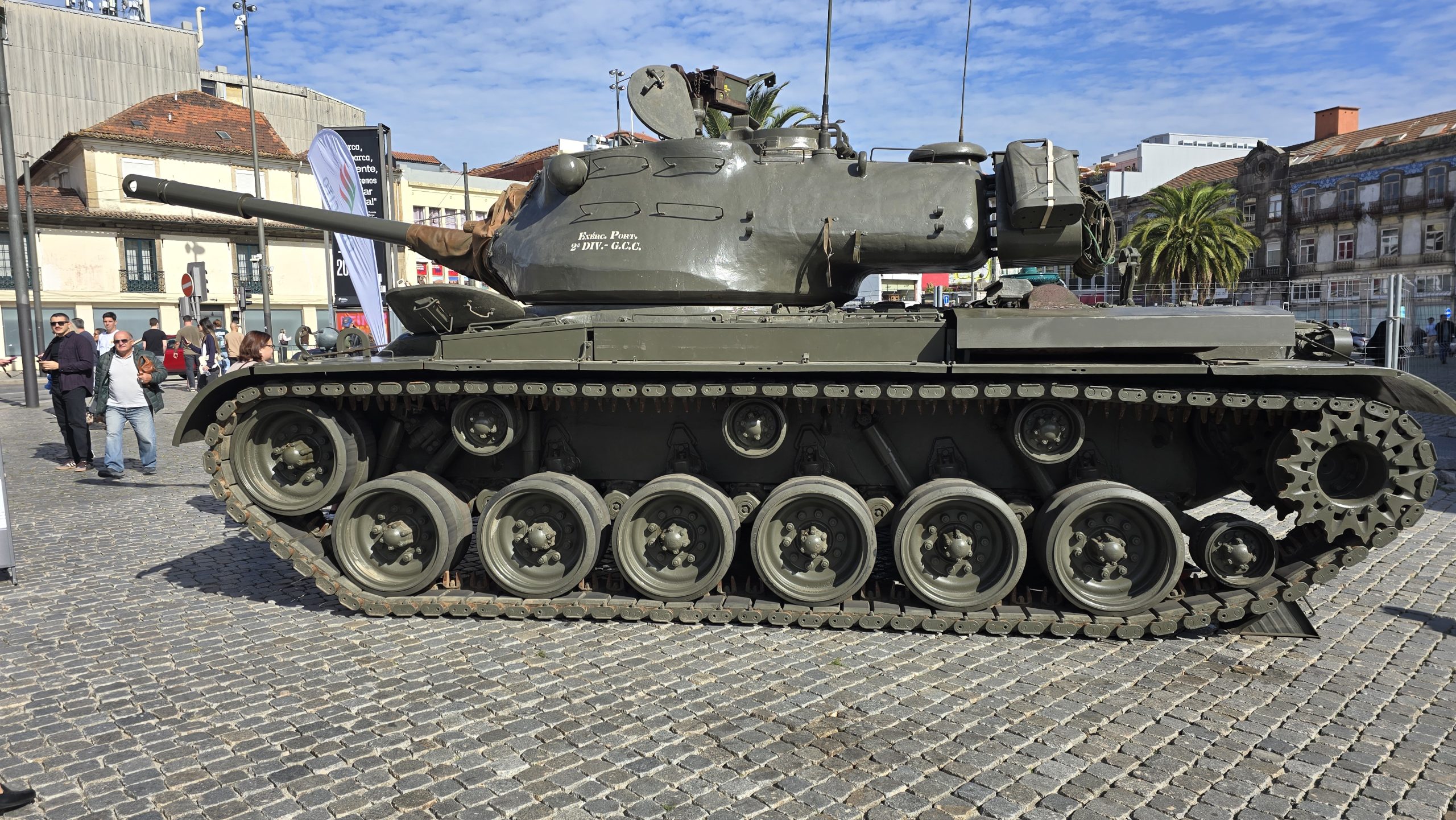
Porto is a university town, and you can’t miss the students. They wear the traje académico: black suits and long black capes that make them look like a convention of young wizards. (Yes, local legend credits them as an inspiration for Hogwarts, too.) In the evenings, groups of them roamed loudly through the streets near our hotel and the square where the Army was recruiting, which made for an interesting combination. It was the start of the academic year, when the praxe, the initiation rituals for first-year students, is in full swing. During the day the same black capes turned up busking all over town, singing and playing for spare change. Uni is expensive everywhere.
Culinary Highlights: An Eating Tour Disguised as a Vacation
With a sommelier in the family and a table of six self-described foodies, we didn’t so much eat our way through Portugal as conduct a survey. We picked restaurants partly from research but mostly from recommendations: hotel staff, guides, bartenders, a winemaker. The recommendations won. Here are the results, in order.
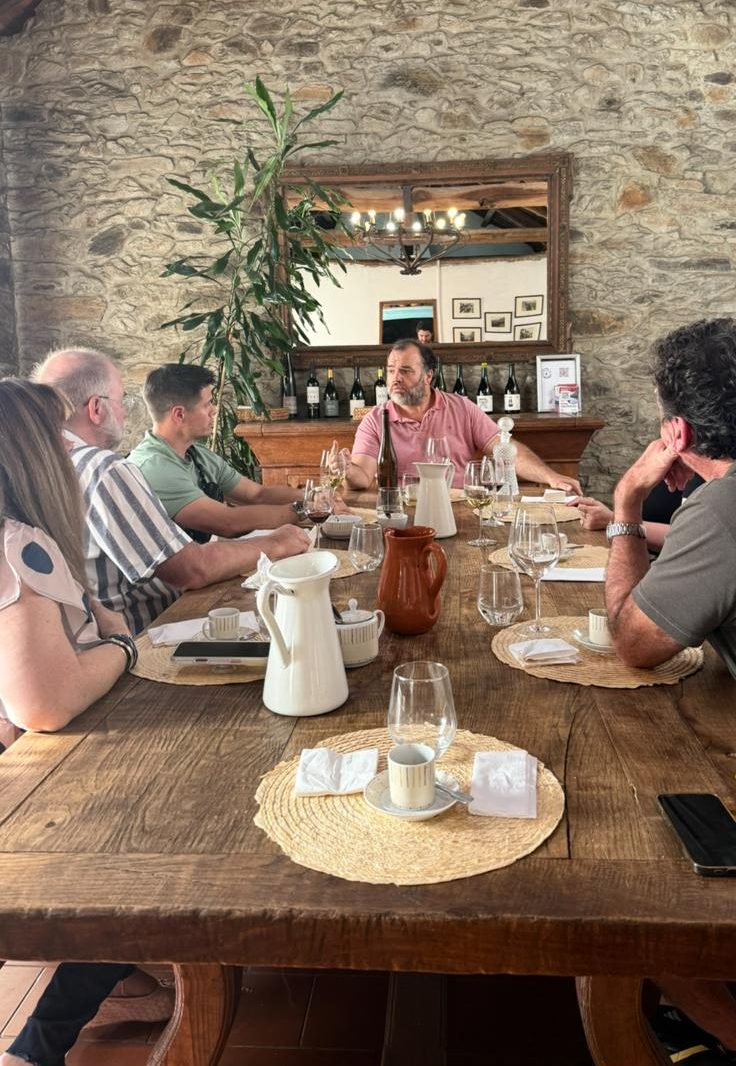
1. Mãos e Irmãos, Douro Valley. Ask my wife, ask our son, ask me: this was the best experience of the trip, and the meal was a big part of it. Rafa’s generous pours are described above in the Douro Valley section, above. The meal that came with the wine deserves its own spot at the top of this list. My wife tried the chicken gizzards (moelas) – in part because Rafa didn’t say what they were until we were eating them. To her own astonishment, she enjoyed them. If a winemaker can make a gizzard convert out of someone, imagine what he can do with a glass of wine.
(For completeness: there was also one restaurant in Lisboa so forgettable that I’ve already forgotten it. That’s the review. It did have some interesting decor, however!)
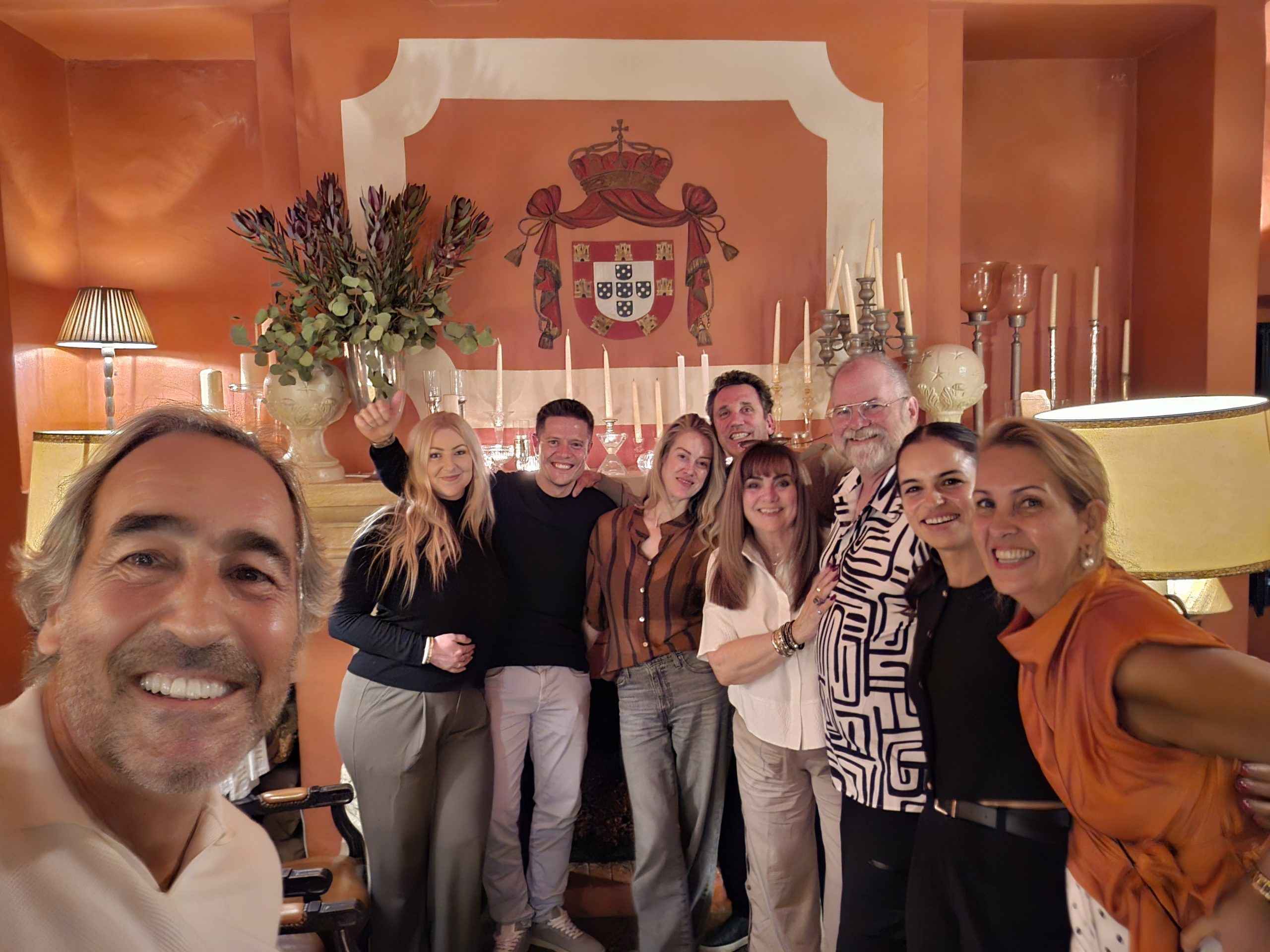
2. Nova Casa de Ramiro, Óbidos. If Mãos e Irmãos was the best experience, this was, for me, the best meal of the entire trip. It was recommended by the staff at the Pousada do Castelo, and it’s run by the proprietor, Pedro, with his wife and daughter. The food was superb, the welcome was even better, and by the end of the evening we were posing for a group photo with the family under the Portuguese royal coat of arms. I had a pork dish in a ginger sauce. Our son, who has eaten a great deal of steak (professionally and otherwise), ordered the steak and declared it in the top 3 best steaks he has ever eaten. Coming from him, that is not a casual remark. This restaurant is just outside the walls of inner Óbidos.
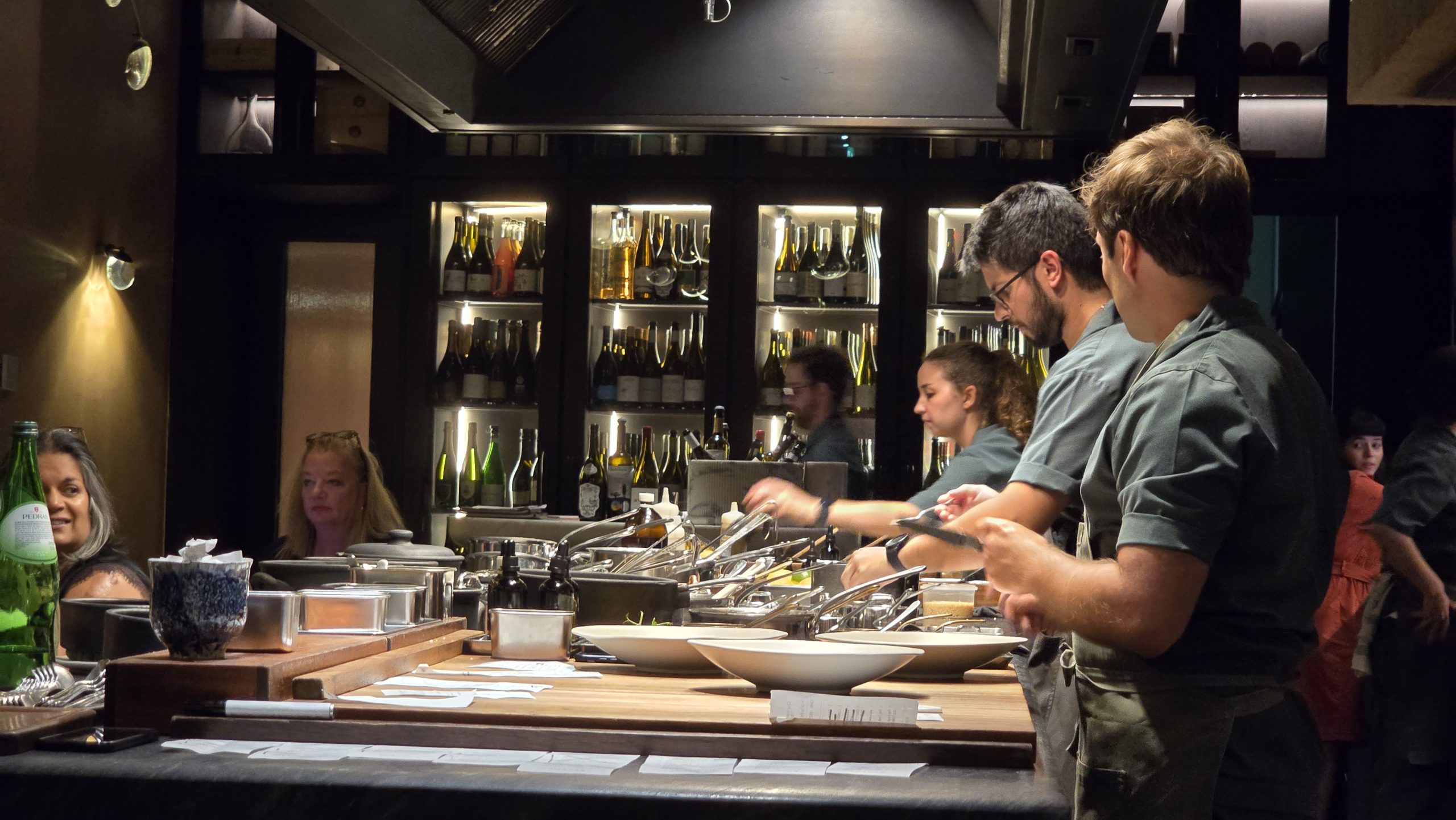
3. Cozinha das Flores, Porto. This was the best meal we had in Porto. Our son found it, and the bartenders at Curioso confirmed it (see below). It is the restaurant of chef Nuno Mendes, and the dining room looks into an open kitchen. We had ringside seats from our table and watched the cooks work like a well-rehearsed orchestra. Everything was fantastic, but the best appetizer, hands down, was the beef tongue. I know. Trust me. (The dining room was designed by the Danish studio Space Copenhagen. Our interior designer had flown home the day before, which is a shame; she’d have had plenty to look at between courses.)
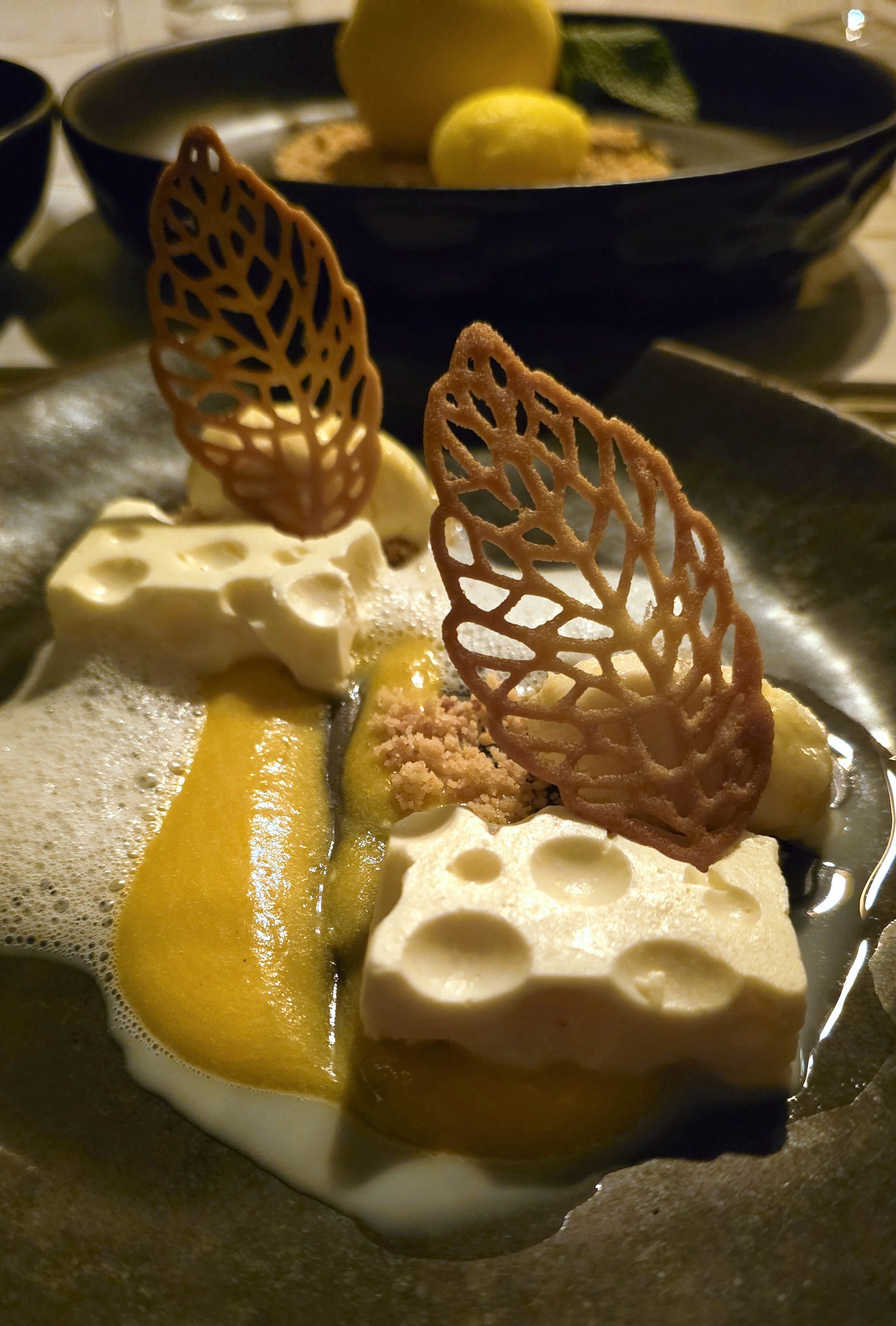
4. Tascö, Porto. This was one of Rafael Ribeiro’s recommendations. Four of us showed up without a reservation, and the restaurant was reluctant to seat us because a large party was coming later to pack the place. They agreed on one condition: we had to leave by 10 p.m. We had planned to anyway.
Then we met our server, Catarina. As the evening went on, we reminded her that we had promised to leave by 10. “I will fix that,” she said, and disappeared. When she came back to the table, she had negotiated on our behalf, and our deadline had moved to 10:30. The food was excellent, creative and beautiful and it was all accomplished with fantastic service. Catarina toasted with us more than once. Even 10:30 proved flexible: we finally walked out at 11, just as the huge party was arriving. On the way out, she hugged each of us and told me, in particular, “I love you.” I’m probably the age of her grandfather. It was completely genuine, and it was typical of the family feeling we found all over Portugal. It’s not surprising that it’s the 8th highest rated restaurant in Porto among 2,886 restaurants on TripAdvisor.
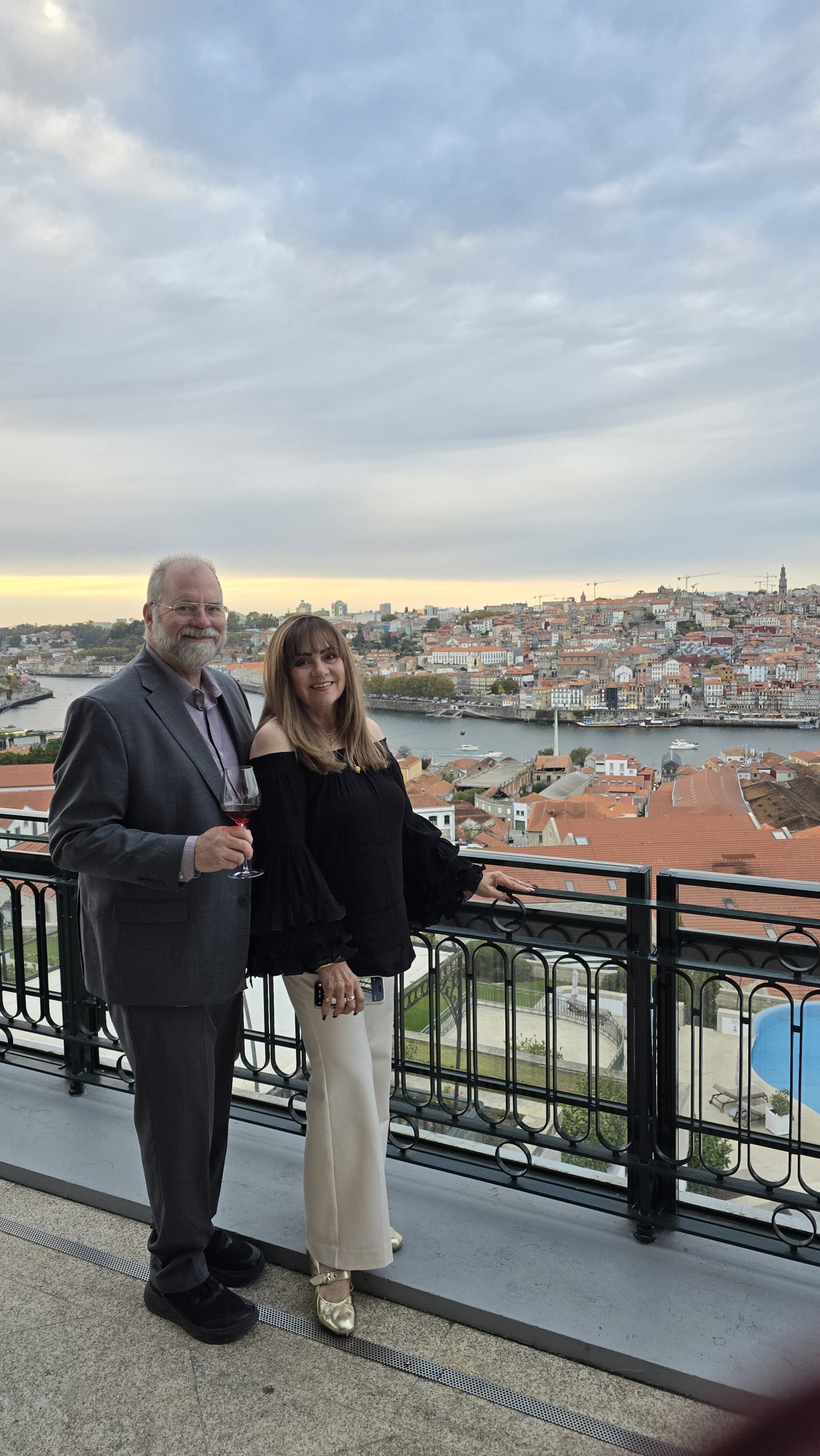
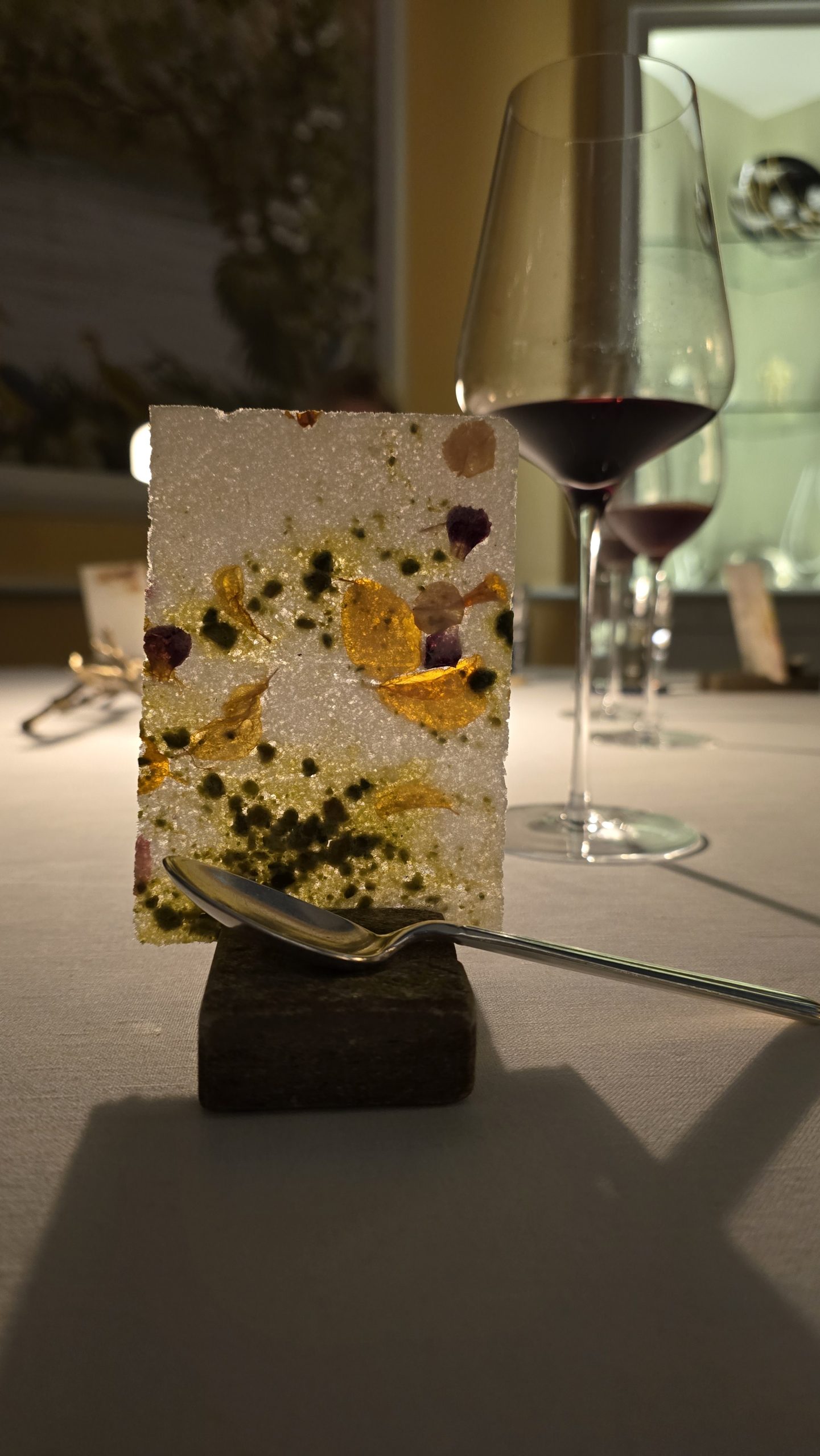
5. The Yeatman, Gaia. This was the big splurge: a two-Michelin-star restaurant in a luxury wine hotel on the Gaia hillside, with a terrace view of all of Porto across the river. It was our last night in Portugal. The dinner for four of us cost about as much as a round-trip transcontinental plane ticket. The food was beautiful, the service was a tantalizing, orchestrated dance, the pairings of wine (and non-alcoholic drinks) with each course were stupendous, and the view was unbeatable. But my honest verdict: I’d choose Nova Casa de Ramiro in Óbidos. I’m a sucker for warmth, and that’s not to say the Yeatman staff weren’t friendly. To a person, they were. Nova Casa (and Tascö) felt like family.
I am not an oyster fan, but the oyster The Yeatman served, complete with an edible “shell,” was delicious. They also brought a dish made from prawns, caviar, prawn NOODLES (yep, noodles made from prawns) and a mousse. One of our group has a shellfish allergy and Yeatman made accommodations. In fact, I nibbled on one of the alternative appetizers and it was delicious.
One of the great things The Yeatman did was the farturas I promised you back in Nazaré. Theirs were by far the best of the trip, as might be expected at the price point.
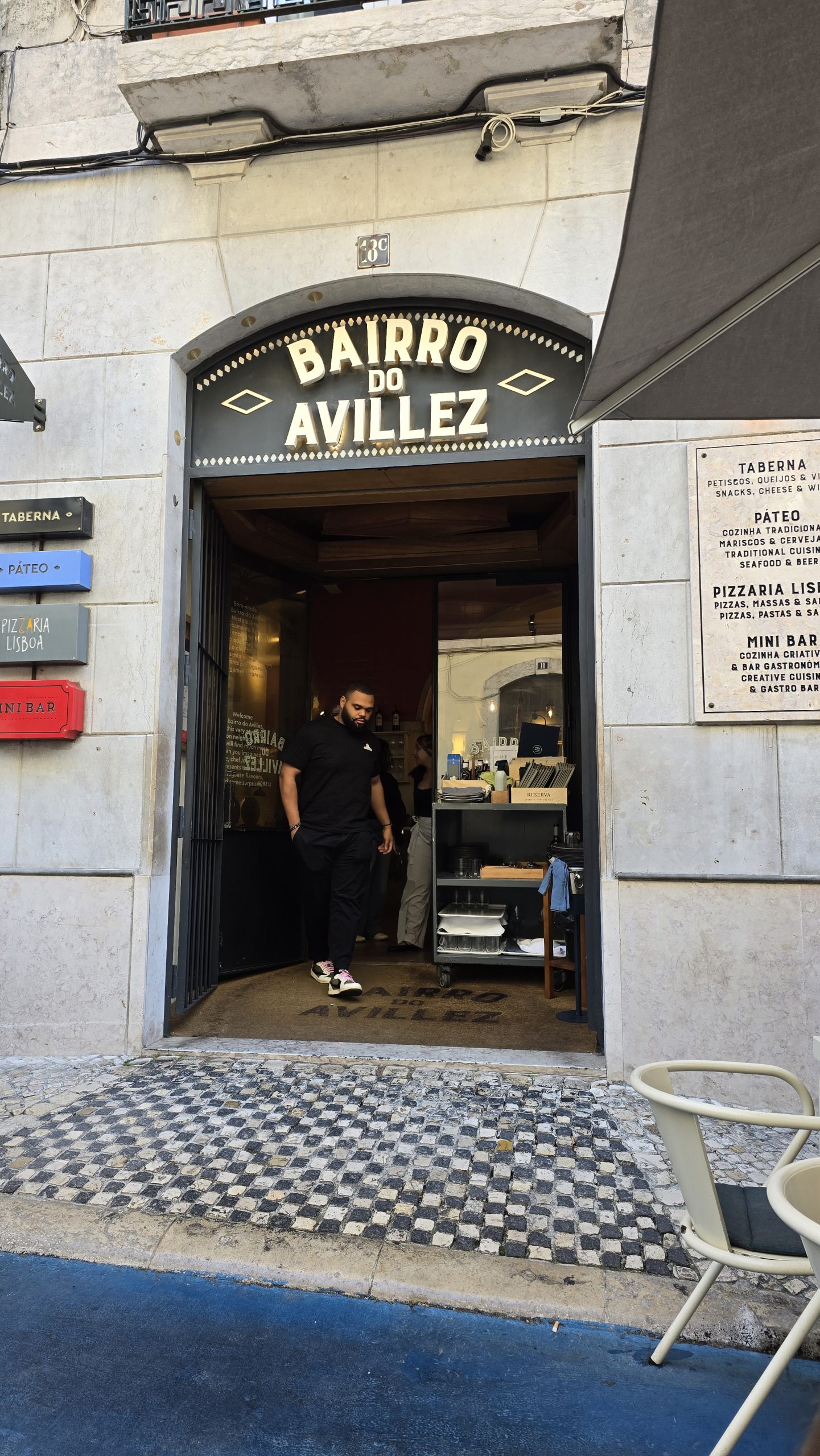
6. Bairro do Avillez, Lisboa. Funny thing: we walked past Belcanto, chef José Avillez’s two-Michelin-star restaurant in Lisboa, and begged for a lunch or dinner seat for 6. Alas, they were full that night and closed for the next two days (Sunday and Monday). The greeter suggested Bairro do Avillez instead, a “four-concept restaurant” by the same chef. It, too, was delicious. Since we weren’t super hungry, what I remember most fondly is the caldo verde, a classic Portuguese soup of potato and finely shredded greens. An even odder thing happened as we turned away from Belcanto’s door: out walked a woman who had studied with our son for his sommelier certification. They had not seen each other in five years. She was in town because her husband was competing for top honors in an international sommelier competition. We went back to Bairro a second time; it’s a good place for a drink, a snack, or a meal. By the way the “Encanto” – a vegetarian restaurant sits right next to the Belcanto and carries a Michelin star.
7. Ja!mon Ja!mon, Óbidos. Like Nova Casa, this was recommended by the Pousada staff, and it was great. It’s mostly outdoors in a lovely courtyard, and the dining is casual. It also started a family disagreement about the spelling, which raged for most of the next day. I was the only one of the six who correctly remembered the exclamation points in the name and the two-color lettering on the sign. I mention this purely for the historical record. Jamón means “ham” in Spanish, and “Ja! Mon” struck me as a friendly Jamaican phrase. Whatever deeper meaning the name means, I do not rightly know. I am making stuff up!
The Famous Ones That Missed
Not everything famous was a hit. Porto’s signature dish is the francesinha (“little Frenchie”), a multi-layered sandwich of ham, sausage, and steak, smothered in melted cheese and a beer-and-tomato sauce, often crowned with a fried egg and surrounded by fries. Before we’d even tried one, I bought a pair of francesinha socks as a souvenir. That was a mistake in sequencing.
Our tour driver and a server in the Wine and Book hotel café gave us two different recommendations for where to get one. We went with the driver’s pick, and most of us were disappointed. Afterward the server explained what we’d done wrong: the driver had sent us to the popular place, while hers had the better sauce, and the sauce is what makes a francesinha. Lesson learned: when a local tells you about the sauce, listen to the local who talks about the sauce.
The other Lisboa and Porto classic is the bifana, a simple sandwich of thin pork cutlets marinated in garlic and wine with a little hit of hot pepper. Partway through our long walk, our son stood in a very long line at a famous bifana counter while the rest of us rested our knees. It was a bit of a miss for most of us too – owing to the soggy bread. I liked it better than the francesinha, which is faint praise, but at least the socks didn’t commemorate it.
Cocktails, Hidden and Otherwise
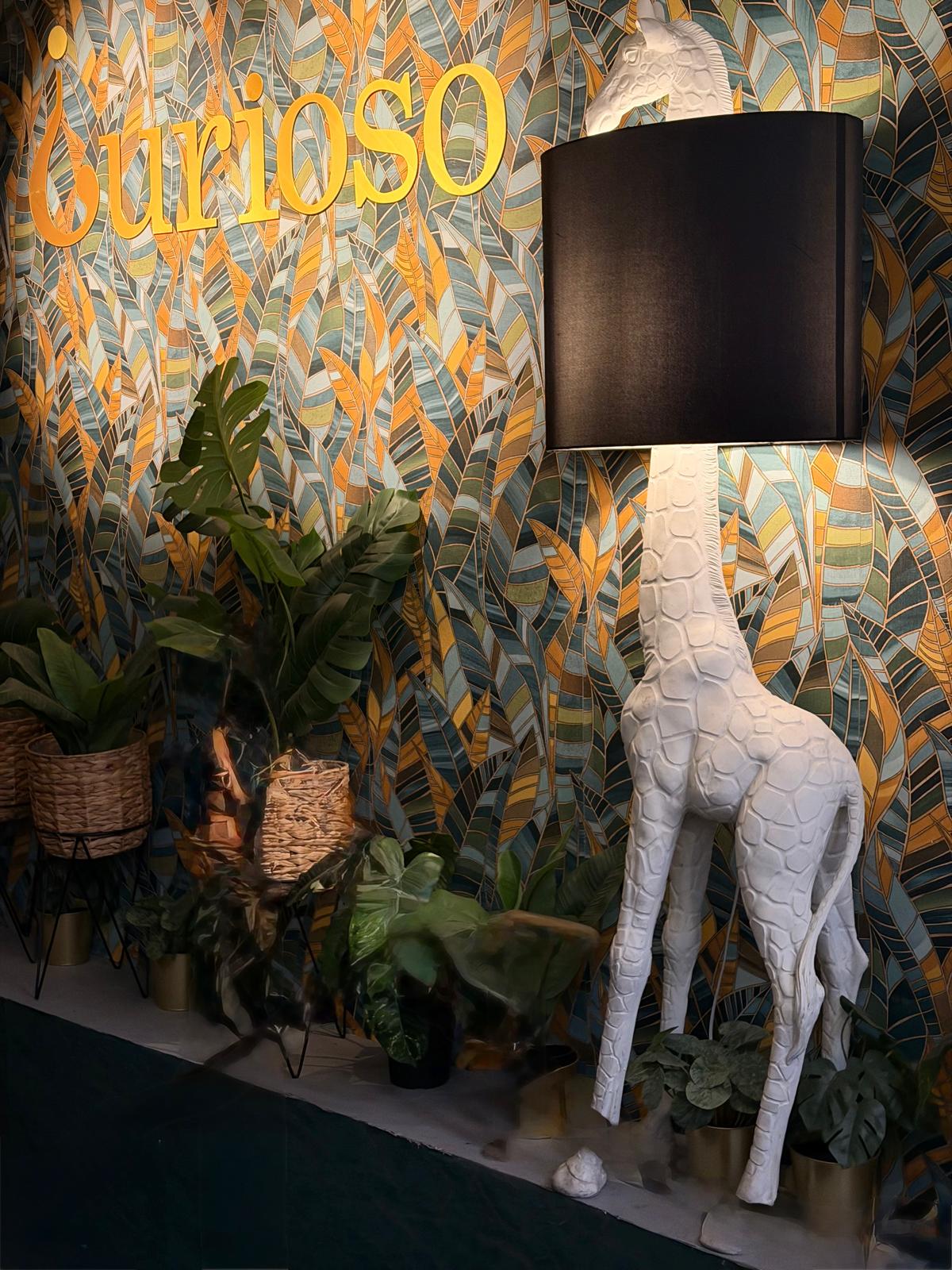
Our son also found Curioso, a cocktail bar in the Ribeira district about a block from Cozinha das Flores. The cocktails were genuinely inventive, and our sommelier approved, which is high praise. Then it got better: downstairs, in the same building, is Apotecário, a speakeasy you enter through what looks like a wall of drawers in an old apothecary. Apotecário is known for bartenders who ask about your tastes and your mood and then build a drink to match: a prescription, if you like. We felt very clever for about four seconds, until we remembered that our son was the one who’d found it. For what its worth, what the “tour director” made me was all good.
The Port, the Pastry, and the Beans
Three more things deserve a place in the culinary hall of fame. The pastéis de nata, especially the originals at Belém. The peixinhos da horta at Entretanto, tempura’s Portuguese ancestor. And the 20-year-old Tawny port, which turned a skeptic into a believer.
Accommodations and Planning
Our three bases each had their own personality:
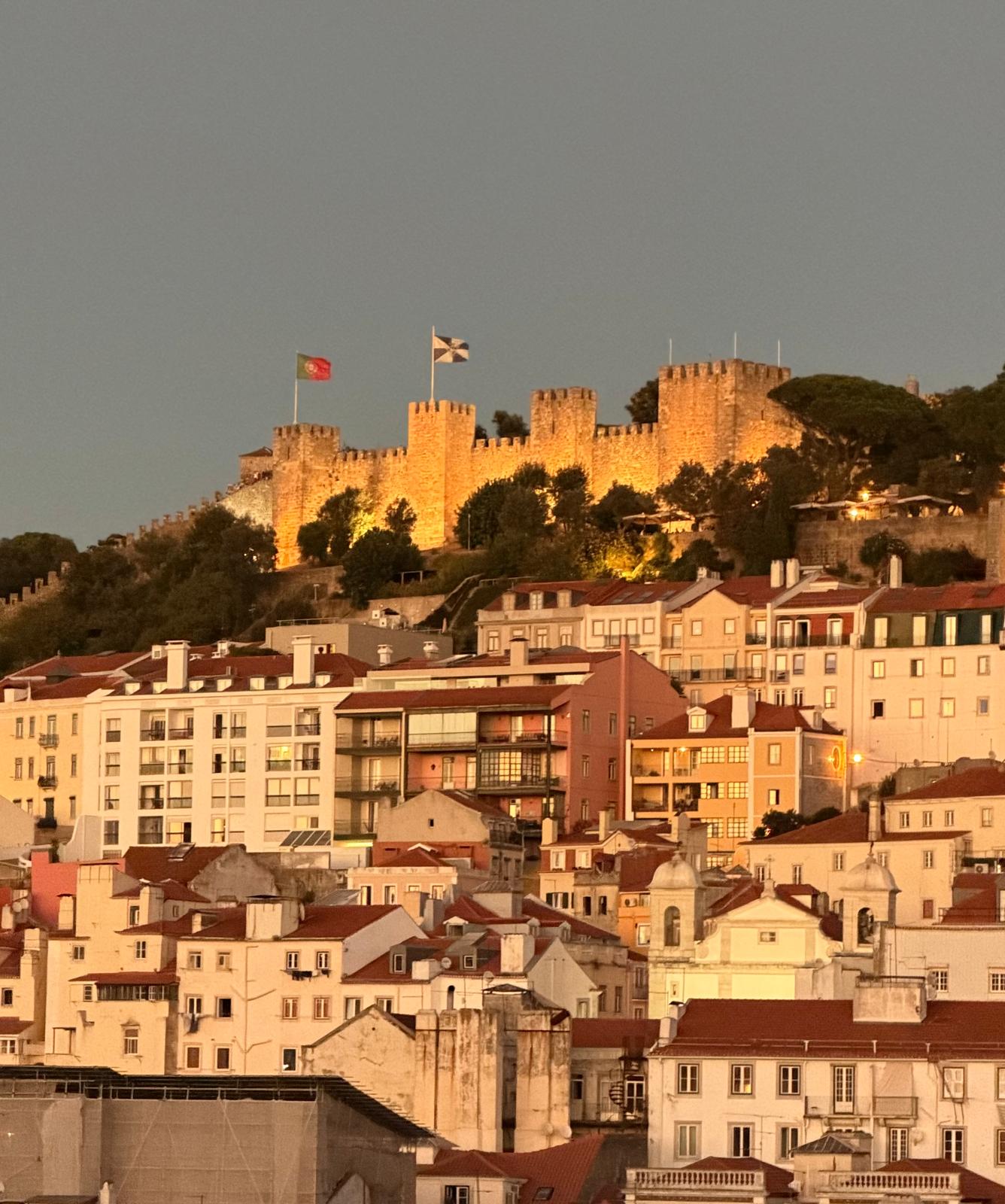
- Hotel do Chiado, Lisboa: centrally located in the Chiado, with the Entretanto rooftop bar. Come for the location, stay for the sunsets and the green beans. The lobby is not much, the elevators are tiny (makes sense given the age of the hotel), but the location was fantastic and everything was clean and in good working order.
- Pousada do Castelo, Óbidos: you sleep inside a medieval castle (I believe there are 3 such rooms available). The arrow-slit window is part of the experience. The staff’s restaurant tips were worth the price of the room. If you do not get a tower room, the more modern portion had very generous sized rooms as my daughter discovered. The downside is more steps up to the breakfast area and restaurant (from the towers it is a flat walk with a “guest only” door to access the upper floor). There are even more rooms tucked against the walls along the bottom floor.
- Wine & Books, Porto: a comfortable, characterful hotel within walking distance (or Uber distance) of everything, with a rooftop bar of its own and its own spectacular sunsets. It did have one very peculiar design choice: the shower sits open on three sides in the middle of the room. Even the suites on the 5th floor have a shower that open onto the outdoor balcony!
A few hard-won tips:
- Book Pena Palace and Livraria Lello ahead. Our 10:00 Lello entry let us bypass the hundreds already in line. Our Pena tickets had an 11:00 entry time, and it still took 45 minutes of snaking through a line to get inside. “This is not the worst it gets” is not a joke.
- Wear real shoes. Cobblestones and the smaller stones that pave the sidewalks are beautiful, slippery, and unforgiving. The Portuguese massage is free, but the physical therapy afterward is not.
- Use Uber in Porto. It’s cheap, and it saves your knees on the hills.
- Make dinner reservations, and when the hotel staff (or a winemaker) recommend a place, go. They were right every time.
- For famous dishes, ask the locals where the best version is, not the most popular one. Ask about the sauce.
- Bring someone who knows wine. We recommend a sommelier. Ours is
notavailable for hire. Correction: our sommelier has reviewed this article and informs us that he is very much available for hire.
Portuguese for Spanish Speakers: A Survival Guide
On paper, Portuguese and Spanish are close cousins. A Spanish speaker can read a Portuguese menu with reasonable success. Listening is a different story. Here’s what I learned, mostly the hard way.
Rule One: Obrigado, Not Gracias
Every guide told us repeatedly that the biggest mistake you can make in Portugal is to say gracias. They were mostly kidding. The Portuguese and the Spanish enjoy a long and healthy tradition of ribbing each other, and we heard this suggestion so often that I came to see it as a national pastime. Men say obrigado and women say obrigada. It literally means “obliged,” like the Spanish obligado, which brings us to the sounds.
- L’s often become R’s. Obligado becomes obrigado, blanco (white) becomes branco, playa (beach) becomes praia, iglesia (church) becomes igreja, and plaza becomes praça. Silver, plata, becomes prata, which matters quite a bit when you are jewelry shopping.
- Sometimes the L just leaves. The Spanish salida (exit) is the Portuguese saída. You’ll see it on every door and every highway sign.
- B’s sometimes become V’s. Librería (bookstore) becomes livraria, which is how Livraria Lello got its name.
- Z goes into hiding. Where Spanish has a z, Portuguese often has a ç, a c with a cedilla: plaza becomes praça, and cabeza becomes cabeça.
- NH is ñ, and LH is ll. Espanha in Portuguese is España in Spanish, and vinho (wine, which you will need) is “VEEN-yo.” LH makes an “el-yeh” sound: mulher (woman) is “mool-YEHR.”
- X shows up a lot, usually sounding like “sh”: peixe (fish) is “PAY-shuh,” and Lisboa’s downtown, the Baixa, is “BYE-sha.” (I noticed the same thing around Barcelona, where Catalan – and Elon Musk – are just as fond of the letter.)
- S usually sounds like “sh.” At the end of a syllable, s turns into sh: pastéis sounds like “pash-TAYSH,” and Lisboa sounds like “Lizh-BOH-ah.”
- Endings get swallowed. Unstressed vowels shrink or vanish, especially at the ends of words. Porto sounds more like “Portu,” and our bellhop introduced himself as “DYOH-goo” (his badge read Diogo, the Portuguese cousin of Diego). A whole sentence can sound like a single long word. Imagine a Spanish speaker who is slightly sleepy and very relaxed.
Hello, Please, Yes
- Bom dia (good morning), boa tarde (good afternoon), and boa noite (good evening, and good night). In practice, boa tarde comes out closer to “BOH TARD”; the final a in the first word and the ending e barely show up. If you haven’t yet eaten lunch, it’s too early to say boa tarde.
- Bom in Spanish is buen, and here’s the twist. Spanish greets you in the plural, buenos días, while the singular buen día is, in much of the Spanish-speaking world, more of a send-off: “have a good day.” Portugal says hello with the singular, bom dia.
- Why bom dia but boa tarde? Gender. Dia ends in a but is masculine in both languages (it’s el día in Spanish, too), while tarde and noite are feminine. So the “good” changes clothes to match the gender of the following word.
- Sim means yes. Por favor still means please. Use both often.
Gender Trouble at the Table
My most consistent mistakes came at mealtimes. I asked for una cuchara and got a polite, puzzled look; a spoon is a colher. A knife isn’t un cuchillo but a faca, so a masculine Spanish knife turns into a feminine Portuguese one. And a fork is not el tenedor but o garfo, which sounds less like cutlery than something you’d say after stubbing a toe.
Some words did come easily: a igreja (la iglesia, the church), and a escada (la escalera, the stairs), which in Porto you will need constantly. Bread is o pão, not el pan. (Watch out for bolo, which usually means cake, though in Madeira and the Azores a bolo can be a kind of bread.
False Friends
- Azeite looks and sounds like the Spanish aceite (oil), but in Portuguese it means specifically olive oil. Ordinary oil is óleo. Both words come from the Arabic az-zayt, so this is a family argument that’s been going on for a thousand years.
- Esquisito means “weird,” not “exquisite,” so think twice before you compliment the chef.
- Embaraçada means embarrassed. In Spanish, embarazada means pregnant. Mixing them up is embarrassing in either language. This one amuses me because my high school Spanish teacher, who once worked as a flight steward, liked to tell about a passenger who spilled her drink and announced, mortified, that she was embarazada. The man sitting next to her turned red. Perhaps she was Portuguese!
Gracias, Finally
On our last morning, our driver to the Porto airport spoke in halting English. After a few exchanges I asked where he was from.
“Cuba,” he said.
After two weeks of being told never, ever to say gracias, I finally had my chance. For the rest of the ride I let loose with all the Spanish I’d been holding in for two weeks. When we pulled up to the terminal, I thanked him with the word I’d been told never to use in Portugal.
“Gracias.”
It was the best word I said all trip.
Have you been to Portugal? Or are you a Spanish speaker who has been vorpalized by Portuguese? Tell me in the comments. And for our last adventure, a river cruise on the Danube that somehow redeemed an earlier North Sea disaster, the Danube Waltz story is here.
About the images: All photos taken with a Samsung S24 Ultra unless otherwise noted. Some photos courtesy of our fellow travelers. GPS tracks were recorded during the trip.